Private Power Pole Damage: What to Do and How Cover Works
Storm damage doesn’t automatically mean an insurance payout. Whether insurance will cover private power pole damage depends on your policy, what caused the damage and the circumstances of the claim. In NSW, the property owner is responsible for ensuring a private pole within their boundary is repaired and made safe.
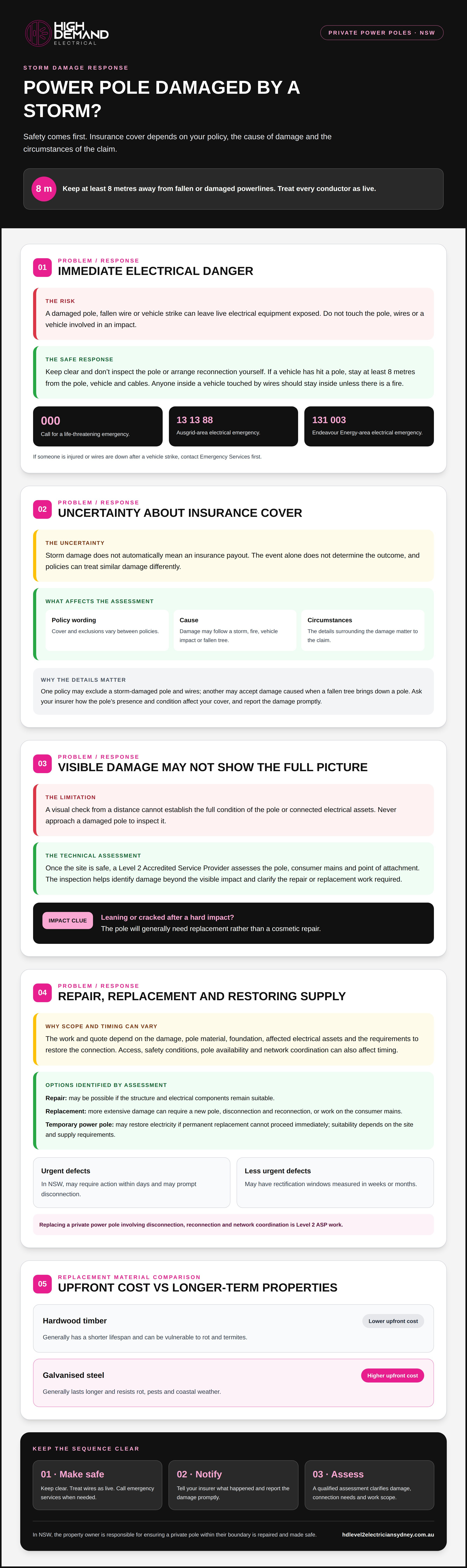
A damaged pole or fallen powerline is also an immediate safety risk. Stay at least 8 metres away from fallen or damaged powerlines and treat them as live. Call 000 for a life-threatening emergency.
It’s understandable to want clear answers when a storm has left your property without power or damaged its electrical supply. This article explains what to do first, what can affect an insurance assessment and how an electrical professional assesses a private pole for repair or replacement. It also explains why maintenance records matter and how insurers may view sudden storm damage differently from age-related deterioration.
Key Takeaways
• Learn which photos and repair records can help document a storm damage claim.
• See what an electrical assessment considers when determining whether a pole can be repaired or needs replacing.
• Understand how the pole’s condition and maintenance history may influence an insurer’s assessment.
• Find out why sudden storm damage may be assessed differently from age-related deterioration.
• Explore when private power pole installation and Level 2 ASP electrical services may help restore a safe electrical supply.
What to do if a power pole or powerline is storm damaged?
Keep clear of damaged power poles and wires first. Electrical hazards come before insurance paperwork. Whether a claim is covered depends on the policy, the cause and the circumstances.
Storm and Other Damage Cover
Home insurance may cover a private power pole damaged by a storm, fire, vehicle or fallen tree, but the policy wording and claim circumstances matter. One policy may exclude a storm-damaged pole and wires, while another may accept damage caused when a fallen tree brings down a pole. The event alone doesn’t determine the outcome.
Ask your insurer how the pole’s presence and condition affect your cover, and report the damage promptly. A private power pole carries electricity from the network connection point towards a building, beyond the point of attachment. This distinction helps identify which equipment and damage your claim concerns.
Owner Responsibility for Private Poles
A private power pole within the property boundary is the property owner’s responsibility. In NSW, owners must ensure it’s repaired and made safe, including when storm damage affects the pole or its wires. This responsibility applies even while an insurer assesses the claim: safety and repair arrangements can’t wait for a coverage decision.
Rules and responsibilities vary across Australia. In NSW, the property owner is responsible for a private pole inside their boundary. In Western Australia, owners are responsible for maintaining private poles and lines on their property. Insurance terms also vary between policies and insurers, so don’t assume a decision in one state or under one policy applies to another.
Stay at least 8 metres from fallen or damaged powerlines in NSW and treat every conductor as live. Don’t touch a pole, wire or vehicle involved in an impact. If a vehicle has struck a pole, keep at least eight metres from the pole, vehicle and cables. Occupants in a vehicle touched by wires should stay inside unless there’s a fire.
For a life-threatening emergency involving a damaged power pole or powerline in NSW, call 000, according to NSW Government. In Ausgrid areas, call 13 13 88 for an electrical emergency; in Endeavour Energy areas, call 131 003. If someone is injured or wires are down after a vehicle strike, contact Emergency Services first.
Once people are safe, notify your insurer and explain what happened, including whether the damage followed a storm, fire, impact or fallen tree. Don’t approach the pole to inspect it or arrange reconnection yourself. A qualified assessment can help establish the damage and what repair work is needed. For storm-related electrical hazards in Sydney, electrical storm damage support is relevant.
Private pole damage assessment and repair or replacement
Once the site is safe, a technical assessment identifies the damage and work required. Its findings clarify whether the pole, electrical connections or both need attention, and provide the insurer with useful technical detail.
Assessing Impact Damage
An impact assessment checks whether a collision has affected the pole’s structure or connected electrical assets. A pole that leans or cracks after a hard impact will generally need replacement rather than a cosmetic repair.
A Level 2 Accredited Service Provider assesses the pole, consumer mains and point of attachment after the site is safe. This detailed inspection helps establish whether damage extends beyond the visible impact and informs the repair or replacement scope. Before approving work, ask your insurer: will insurance cover private power pole damage under this policy?
Repair and Replacement Costs
Repair or replacement costs depend on the damage, pole material, foundation, affected electrical assets and work required to restore the connection. The cost is determined after a quote request, with the work scope and site requirements shaping the quote.
A repair may be possible if the structure and electrical components remain suitable. More extensive damage can require pole replacement, disconnection and reconnection, or work involving the consumer mains and network coordination. The assessment helps describe these requirements for the insurer. Owners may also ask, “Will insurance cover private power pole damage?” The insurer considers the policy terms, cause and circumstances alongside the evidence.
Replacing a private power pole is Level 2 ASP work when it involves disconnection, reconnection and network coordination. These steps matter because the pole forms part of the electrical supply, not just the property’s physical infrastructure. The assessment identifies the supply and connection requirements that shape the work.
Replacement timing depends on safety conditions, access, the extent of damage, pole availability and electrical requirements. Network coordination may also affect when work can proceed. In NSW, urgent private-pole defects can require action within days and may prompt disconnection. Less urgent defects may have rectification windows measured in weeks or months.
Material affects the replacement decision and longer-term considerations. Hardwood timber poles generally cost less upfront than galvanised steel, but have a shorter lifespan and can be vulnerable to rot and termites. Galvanised steel generally costs more upfront, lasts longer and resists rot, pests and coastal weather.
If permanent replacement cannot proceed immediately, a temporary power pole can restore electricity while arrangements continue. The assessment determines whether this option suits the site and supply requirements. High Demand Electrical provides private power pole installation for poles that need replacing.
To discuss an assessment or request a quote, contact High Demand Electrical.
What Information Helps With a Storm Damage Insurance Claim?
A clear claim record links the damage, its cause and the work needed. For a private power pole, keep evidence of the event alongside details of the pole’s condition and maintenance history.
Start with the incident. Record when the storm or other event occurred, what you observed and how the damage appeared. For example, note whether a fallen branch struck the pole, wires sagged afterwards or the pole began leaning. Take photographs from a safe position, without approaching damaged electrical equipment.
• Photographs showing visible damage and the surrounding area.
• A written account of how the damage happened and when you noticed it.
• The pole’s type and age, plus records of previous repairs.
• An electrical assessment and a quote for repair or replacement.
These records give the insurer a clearer account than a brief description such as “storm damage”. Keep original images and documents together, and note which photographs show the pole, wires, point of attachment or nearby fallen tree. Don’t disturb the site to collect evidence.
An electrical assessment can document the pole, consumer mains and point of attachment. It can also describe visible defects, such as a new lean, cracks, rot, rust, sagging wires, low clearance or loose fittings. A detailed report helps distinguish observed damage from assumptions about its cause. The repair or replacement quote then identifies the proposed work and affected electrical assets.
Maintenance records matter because insurers may assess whether the property owner maintained the private pole. They may also require confirmation that private poles are well maintained and comply with local regulations. Inspection notes, repair invoices and earlier defect reports can show the pole’s condition before the event. For example, a dated record of an earlier repair helps establish what work was completed and when.
Keep any defect notices, correspondence and records of disconnection or reconnection with the claim documents. If Ausgrid has been contacted about an electrical emergency, retain the relevant details and related communications. These records can help clarify which part of the supply was affected and what steps followed the incident.
When lodging the claim, provide a factual timeline: the event, when the damage was discovered, who was notified and what assessment followed. Separate confirmed observations from estimates. If the pole had existing deterioration, include its history rather than describing every fault as storm-caused. This helps the insurer assess the event and the pole’s condition against the policy.
Organise the material by date, from pre-event inspection records to post-event photographs and the latest assessment. A single file containing the event description, maintenance history and repair quote makes it easier to answer questions without confusing old defects with new damage.
How pole maintenance may affect insurance coverage
A private power pole’s condition can affect an insurer’s assessment of damage. Inspection and repair records help show whether a storm caused a new fault or exposed an existing defect.
Insurers may exclude damage linked to deterioration or poor maintenance, particularly fires or electrical faults originating from a defective pole. The policy wording and cause of the loss matter: a storm-damaged pole with existing rot may be assessed differently from a sound pole damaged by a sudden impact.
Maintenance involves more than appearance. A new lean, cracks, rust, rot, loose fittings or sagging wires can indicate a problem that needs assessment. Arrange an electrical assessment when these signs appear, rather than waiting for a storm or supply fault to reveal how serious they are.
Ground-level signs matter too. Visible rot near the base or movement where the pole enters the ground may warrant professional inspection. Don’t dig around the base or touch the pole to investigate. Electrical assets can remain dangerous even when damage looks minor.
Records help establish a timeline. Keep inspection reports, repair invoices and notes about earlier defects together. If an electrician identifies a leaning pole, documentation of the assessment and completed repairs can show what was observed and how the issue was addressed.
Useful records include:
• The pole’s type and age, with any known installation details.
• Inspection findings, including observed defects and recommended work.
• Invoices or reports describing repairs and when they occurred.
• Photographs showing the pole’s condition before and after repairs.
These records don’t prove that a claim must be accepted, but they give the insurer evidence to consider alongside the policy and event details. Missing maintenance history can make it harder to distinguish gradual deterioration from sudden storm damage. A previous report noting rust, for example, may help explain whether later damage affected the same area.
Treat an urgent defect as a safety issue, not just an insurance concern. A damaged or leaning pole may need assessment and rectification to address risks to people, buildings and the electricity supply. If the pole cannot safely remain in service, electrical work may involve disconnection before repairs proceed.
After maintenance or repairs, keep the final assessment and work documents with the property records. If another event later damages the pole, these dated records can help distinguish its condition beforehand from the damage that followed. A clear maintenance history supports a more precise claim assessment, but does not replace the insurer’s review of the policy.
Sudden storm damage versus age-related deterioration
An insurer can assess sudden storm damage differently from deterioration that developed over time. The cause of damage, the pole’s condition and the policy wording all inform the claim assessment.
A sudden event has a clear point in time. For example, a storm may bring down a tree that strikes a previously serviceable pole, or strong winds may cause new visible damage. Photographs taken safely after the event, together with earlier inspection records, can help show the sequence. They don’t establish cover by themselves, but they help distinguish new damage from an older defect.
Deterioration develops gradually. Rot, corrosion, cracks or a worsening lean can indicate that a pole’s condition changed before the storm. If an insurer links a loss to wear, poor maintenance or a pre-existing defect, the policy may treat it differently from damage caused directly by a sudden event. The specific policy terms and evidence remain central to the assessment.
Mixed damage needs careful description. A storm might break an already weakened pole, for instance. The assessment should record both the storm damage and the pre-existing condition, rather than assigning every fault to one cause. An electrical report can identify affected infrastructure and describe whether damage appears new, progressive or consistent with both.
A defect notice adds another part to the timeline. It can show that a fault was identified before the insured event, while repair records can show whether action followed. Keep the notice, inspection findings and completed work documents together. If a storm later causes further damage, these records help separate the earlier defect from the new impact.
Compliance and maintenance history can also influence the insurer’s review. Known defects or unresolved maintenance issues may raise questions about whether deterioration contributed to the loss. Evidence of previous inspections and completed repairs can help establish the pole’s recorded condition before the event. Neither record replaces the policy’s terms.
Safety comes first during an emergency. Treat damaged wires as live and keep clear while the hazard is assessed. Once the area is safe, record the event details and arrange a professional assessment to distinguish storm damage from age-related deterioration. Don’t touch or attempt repairs on damaged electrical infrastructure.
Clear evidence helps tell the difference between sudden damage and gradual decline. To arrange an assessment of a damaged private pole, contact the electrical team.
High Demand Electrical: Private Power Pole Installation
High Demand Electrical provides private power pole installation when a damaged pole needs replacement or a property requires a new installation. This is the practical next step when an electrical assessment identifies pole work, rather than deterioration that only requires monitoring or unrelated maintenance.
As a Level 2 ASP electrical service provider, High Demand Electrical can undertake private power pole installation as part of the electrical supply infrastructure work. The required scope depends on the site, pole condition, connection and affected electrical assets. Share the assessment findings and relevant claim documentation so the proposed work can be considered alongside the insurer’s process.
For private power pole installation or related Level 2 ASP electrical work, contact High Demand Electrical.
Plan the next step for your property
After a pole incident, the next decision is how to restore a safe, suitable electrical supply and address any related work identified during the assessment. Coordinate the insurer’s claim process with the electrical work so the scope, findings and repair records stay clear.
Whether your insurer will cover private power pole damage depends on your policy and the circumstances of the loss. The repair assessment can still help clarify what needs attention, even while a claim is being considered. High Demand Electrical offers Level 2 ASP Electrical Services, Private Power Pole Installation and Switchboard Upgrades for relevant electrical work.
Have the assessment findings or defect notice ready when discussing next steps. Contact High Demand Electrical to discuss electrical work for your property and agree on a clear plan.
Frequently Asked Questions
Who is responsible for a private power pole?
In NSW, the property owner is responsible for ensuring a private power pole inside their boundary is repaired and made safe. A private pole carries electricity from the network connection point to a building, after the point of attachment. If you’re unsure whether a pole is private, its position and electrical connection can help identify it. Responsibility and maintenance arrangements differ between Australian jurisdictions, so consider the state where the property is located.
A Car Hit My Power Pole: Who Pays for Repairs?
The at-fault driver is usually liable for damage caused to a private power pole. Keep a record of the incident and any available details about the vehicle, but don’t approach a damaged pole or wires to collect information. If the impact has brought down wires or injured someone, contact Emergency Services first. The property owner should also notify their insurer and arrange a safe assessment of the electrical damage.
Worried about a pole on your property?
Arrange an assessment if a pole is newly leaning, cracked, rotten or rusty, or has sagging wires or loose fittings. These signs can indicate a defect even if the pole is still standing. Don’t touch the pole, fittings or wires, and keep clear if electrical damage is visible. An assessment can identify whether the issue affects the structure, consumer mains or point of attachment, helping you understand what work may be needed.
Does home insurance in Australia cover damage to a private power pole?
Home insurance may cover damage to a private power pole, but there’s no single answer for every Australian policy. The insurer considers the policy wording, cause of damage and circumstances of the claim. For example, storm damage may be treated differently from deterioration that developed over time. Tell your insurer what happened and describe any known condition issues, then review how your specific policy applies to the pole and related electrical assets.
What damage to a private power pole is covered by Australian home insurance?
Coverage depends on the policy and circumstances, not a universal list of covered events. Storm, fire, vehicle impact or a fallen tree can each cause damage, but the cause alone doesn’t establish whether a claim is covered. The insurer may consider the pole’s condition and whether a maintenance issue contributed. Describe the event accurately and keep evidence of the damage, assessment findings and proposed repair work for the claim.
Who is responsible for repairing or replacing a private power pole in Australia?
In NSW, the property owner is responsible for ensuring a private pole within their boundary is repaired and made safe. A Level 2 Accredited Service Provider assesses the pole and affected electrical assets once the site is safe. Replacement may involve the pole, consumer mains or point of attachment, depending on the damage. Across Australia, ownership and maintenance responsibilities can vary by jurisdiction, so don’t assume another state follows NSW arrangements.
What should I do after a private power pole is damaged, and who should I contact first?
Keep well clear of damaged poles and wires, and treat fallen powerlines as live. In NSW, stay at least 8 metres away; call 000 for a life-threatening emergency involving a damaged pole or powerline, according to NSW Government. If there’s no life-threatening emergency, contact the relevant electricity network about an electrical hazard, then notify your insurer. Don’t touch the pole, cables or an impacted vehicle while arranging a safe assessment.
Does home insurance cover damage to wiring or property caused by a damaged private power pole?
Cover for wiring or other property damage depends on the wording of your home insurance policy and the circumstances of the loss. An insurer may assess damage to the pole separately from damage to wiring, a building or other property. Record each affected item and explain how the damage occurred. An electrical assessment can identify which supply components were affected, while photographs and repair documentation help support a clear claim description.
Need Help Fast?
Powering Your Needs with Expertise
If you’re looking for a reliable, experienced, and prompt electrician, look no further than High Demand Electrical. We cater to all your electrical needs, from routine maintenance to emergency repairs and complete system installations. Our skilled team is committed to providing professional service that ensures your electrical systems run smoothly. Whether it's a small task or a large project, give us a call today. Let us meet all your electrical demands with the quality and reliability you deserve.

Licensed Level 2 ASP electricians across Sydney. Same-day service and 24/7 emergency response.
Licence 397193C
ABN 87 051 836 527