
Future-proofing home for electric vehicles in Sydney with a panel plan
Future-proofing a home for electric vehicles in Sydney starts with planning the electrical capacity and charging circuit before installation. Level 2 EV chargers range from 7 to 22 kW, so the right setup depends on your household’s supply, existing electrical loads and charging needs. An electrical assessment helps identify whether your current panel can support the plan or needs an upgrade.
It’s tempting to focus on choosing a charger, but its location, wiring route and effect on the rest of the home matter just as much. Planning during a renovation or alongside other electrical work can make installation more convenient and help avoid unnecessary retrofit work later.
This guide covers when to plan for a charger, practical installation considerations and how to assess switchboard capacity. You’ll also learn what an electrician considers when reviewing your home’s electrical supply, load distribution and future charging needs, so you can plan before work begins.
Key Takeaways
• Plan charger placement and wiring during renovations or other electrical work to make a later installation more convenient.
• Before choosing a charger, consider your usual driving, when the car will be parked and whether you may add another EV.
• Have the home’s electrical panel, service size and load distribution assessed to identify capacity constraints.
• Consider adding conduit during renovation or a panel upgrade, so future wiring may be installed with less disruption.
• Don’t assume a three-phase upgrade is necessary; match the supply and charging setup to your household’s needs.
1. Installing an EV charger before buying an electric vehicle
Installing a charger before buying a vehicle lets you plan its location, circuit and electrical supply together. This is particularly practical during a renovation or alongside solar and battery work, when access for wiring may already be available. Retrofitting later can involve new circuits, panel replacement or structural work. Planning early gives you time to assess those factors before choosing a vehicle.
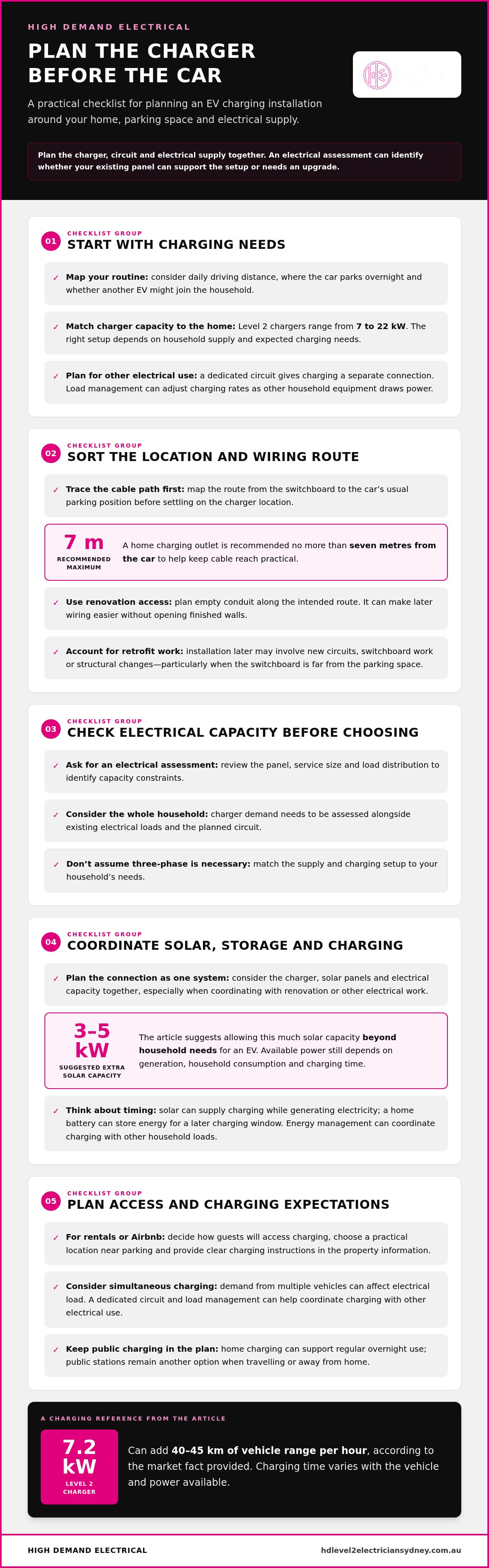
Start with how you expect to use the car. Consider your daily driving distance, where it will be parked overnight and whether another EV might join the household. Level 2 chargers range from 7 to 22 kW, so charger capacity should suit both your electrical supply and expected charging needs. A dedicated circuit provides a separate connection for charging, while load management can adjust charging rates as other household equipment draws power.
How much does charging an EV at home cost compared with public charging in Sydney? Public charging rates vary by station and charging arrangement, so compare the applicable rate with your home electricity plan.
How do solar panels and home batteries work with EV charging in Sydney? Solar panels can supply charging power while generating electricity, and a home battery stores energy for later use. Energy management can schedule charging for suitable periods and coordinate it with other household loads.
If you’re integrating a charger with solar panels, plan the charger connection and charging schedule as part of the same system. A suggested approach is to allow 3–5 kW of solar capacity beyond household needs for an EV. The amount of solar power available for the car will still depend on generation, household consumption and charging time. A battery can shift stored solar energy to a later charging window.
For a rental property or Airbnb listing, decide how guests will access charging before installation. Choose a practical location near the parking space, and include clear charging instructions in the property information. Consider whether guests may charge at the same time, as simultaneous household demand affects electrical load. A dedicated circuit and load management can help coordinate charging with other electrical use.
Home charging can handle regular overnight charging, while public charging stations provide another option when travelling or away from home. A 7.2 kW Level 2 charger can add 40–45 km of vehicle range per hour, according to the market fact provided. Charging time varies with the vehicle and the power available. Planning a home connection doesn’t remove the need to consider public charging for longer journeys.
For future-proofing a home for electric vehicles in Sydney, plan the charger, solar panels and electrical capacity as one project. A qualified electrician can assess the installation requirements; Level 2 electrical work in Sydney is relevant when the project involves electrical infrastructure. Decide the likely charging location and household needs before work begins.
2. Any tips for the install?
Delaying electrical upgrades can make an EV charger project more disruptive. Retrofitting may require new circuits, switchboard work or structural changes, especially when the switchboard is far from the parking space. During a renovation, plan for empty conduit along the intended wiring route. This can make it easier to add wiring later without opening finished walls.
Map the route from the switchboard to the vehicle’s usual parking position before choosing a charger location. A home charging outlet is recommended no more than seven metres from the car. That distance can help keep cable reach practical, while the actual route also affects access, mounting position and installation work. Include the cable path in renovation plans, not just the charger’s position.
Solar and EV charging costs depend on when electricity is generated, used and stored. Solar panels can supply the vehicle during daylight generation, while a home battery can store energy for later charging. Charging from solar can reduce reliance on grid electricity, but the outcome depends on household demand, solar output and charging times. Compare these factors with your electricity plan before estimating savings.
Actual charging costs vary with the vehicle’s energy use, distance travelled and electricity tariff. EV maintenance is separate, so consider servicing and vehicle-specific requirements alongside charging costs.
Are there NSW or Sydney rebates for home EV chargers or electrical upgrades? Assistance depends on the active scheme and its eligibility conditions, including whether it covers charger equipment, installation or broader electrical work. Don’t assume a council program or climate initiative covers every home upgrade. Check the relevant terms before including a rebate in your budget.
For potential future work, plan around the factors that can change the installation: charger choice, circuit route, switchboard capacity and any required supply work. A future vehicle with different charging needs may also affect the system design. Discuss these requirements with an electrician before finalising renovation plans, rather than treating the charger as an isolated appliance.
Home charging can reduce reliance on public charging stations for regular use, while public stations remain useful for longer trips. Consider the charger’s power rating and how it fits your usual parking and charging routine. Electricity source also matters when assessing transport emissions: solar generation can supply some charging energy directly, while grid charging draws from the wider supply.
Installation pricing depends on charger selection, wiring access, panel capacity and any supply work, and is provided after a quote request. For advice on the installation factors in your home, request EV charger installation advice.
3. Electrical panel capacity and circuit planning
A charger adds a substantial electrical load, so start with the panel and household demand. Level 2 EV chargers have power ratings from 7 to 22 kW. Existing home panels may be rated at 100 or 150 amps, which can leave limited room for additional circuits. An electrician assessing capacity considers the panel, service size and how other household loads operate together.
Charging speed depends on the circuit as well as the charger. An EV can be charged overnight on a 10-amp circuit, while a domestic charging circuit can be upgraded to 15 amps to reduce charging time to less than six hours. Wall-charger circuits can be upgraded to 32 amps to reduce charging time to less than six hours. These figures describe different circuit options, not a single setup for every home.
Plan a dedicated EV circuit around the charger’s power rating and the home’s existing electrical demand. A dedicated circuit separates charging from other household equipment, while load management can monitor total usage and adjust charging rates. This helps coordinate the EV with appliances that may run at the same time, such as cooking, heating or cooling equipment.
How can a home be made EV-ready during a renovation or new build? Set aside a route from the switchboard to the parking space, and install empty conduit before walls or driveways are finished. Include space for the charging connection and discuss switchboard capacity during electrical planning, so the future installation can account for household loads and anticipated charging needs.
Solar panels and batteries add another layer to circuit planning. Panels can supply electricity while generating, and batteries can store energy for use later. A suggested approach is to add 3–5 kW of solar capacity beyond household needs for a home with an EV. The energy available for charging depends on generation, household consumption, battery storage and the charging schedule.
For a planned transition to electric, consider how the solar system, batteries and charger will share available power. Charging may draw from solar generation, stored battery energy or the grid, depending on timing and system settings. Load management can coordinate these demands, rather than treating EV charging separately from the rest of the home.
During a renovation, record the intended charger location, cable route, switchboard details and any planned solar or battery equipment. For a new build, include EV charging in the electrical design and preserve a practical pathway for future wiring. These steps help prepare the home for a transition to electric without selecting a charger before the supply and circuit plan are understood.
4. Electrical assessments and installation planning
Begin with an electrical assessment before committing to a charger or installation layout. A licensed electrician can assess the home’s switchboard, supply and load distribution. The review shows how vehicle charging fits alongside existing household demand and whether the supply can support charging while other equipment is running.
For a home EV charger in NSW, have a licensed electrician assess the installation and its electrical requirements. Council, network and strata considerations depend on the property and proposed work, particularly if the project affects shared areas or electrical infrastructure.
Prepare a clear brief for the assessment. Record the vehicle’s usual parking space, charging times and daily driving pattern. Note planned additions, such as another EV, solar panels or batteries. These details help shape a system around actual use, rather than choosing equipment without considering household demand.
Ask the electrician to assess the switchboard, supply, circuit route and simultaneous loads. For example, overnight charging may overlap with heating, cooling or cooking equipment. Load distribution matters because several high-demand devices can operate together. If the existing supply cannot support simultaneous EV charging, an upgrade may be needed.
Solar panels and batteries also affect installation planning. Panels generate electricity at particular times, while a battery stores energy for later use. Vehicle charging can draw from solar generation, stored power or the grid, depending on timing and system settings. Include these components in the assessment to coordinate the charger connection with household energy use.
Apartment projects need a different planning discussion. Shared electricity supply, billing and load management can affect how residents access charging. Identify the parking arrangement, proposed charger location and how electricity use will be measured. For a strata property, account for the shared-property decision process before planning work in a common area.
Consider incentives only after defining the proposed work. Eligibility can depend on the equipment, installation scope and program conditions. Keep charger installation, switchboard work and any supply upgrade distinct in your savings estimate. This makes it easier to compare expected energy use with the household’s electricity plan.
For a practical next step, gather switchboard details, a photo of the parking area and information about planned solar or battery work. An electrician can use these to assess the installation route and electrical capacity. This planning connects the home’s existing infrastructure with future vehicle charging and identifies any supply changes before work begins.
5. Do Sydney homes need a three-phase upgrade for EV charging?
No, a three-phase upgrade isn’t automatically necessary for home EV charging. The decision depends on the home’s electrical supply, the charger’s power rating, household demand and the charging time you need. Three-phase power can reduce EV charging time to around one hour, but that doesn’t make it the right choice for every Sydney household.
Start by matching charging needs with the vehicle and daily routine. A car parked at home for long charging windows may not need the same setup as one requiring faster turnaround. Charger capacity matters too: Level 2 chargers range from 7 to 22 kW. The vehicle, charger and available supply must work together for the intended charging arrangement.
An assessment should consider the existing supply, switchboard and other electrical loads. For example, charging at the same time as household equipment can increase demand. The electrician reviews load distribution and whether the existing installation can support the proposed charger. If capacity is inadequate, a supply upgrade may be needed before adding charging load.
Consider future use as well as your current vehicle. A household planning for another EV, solar panels or battery storage should include those additions in its electrical plan. Multiple loads may operate at once, so the assessment needs to account for how the home uses power. This provides a practical basis for deciding whether three-phase power offers a useful benefit.
Three-phase power can support faster charging, but faster charging isn’t always necessary. Compare your available charging window with the charge you need, then consider the installation’s electrical capacity. A household with a long overnight parking period may prioritise supply capacity and scheduled charging over the shortest possible charging time. A shorter parking window may make faster charging more relevant.
If an upgrade is being considered, plan switchboard and supply work alongside charger installation. This helps coordinate the connection, circuit requirements and future electrical demand. A licensed electrician can assess the existing installation and identify the work required for the chosen charging arrangement. Don’t treat a three-phase connection as the default; base the decision on the home’s load and charging needs.
For a Sydney home, an electrical assessment is the practical next step before deciding on a phase upgrade. It can clarify whether the existing supply supports the intended EV charger or needs changes. Arrange an EV charging electrical assessment to plan the installation around your household’s supply and charging requirements.
High Demand Electrical: Level 2 ASP Electrical Services
High Demand Electrical provides Tesla and home EV charger installation, Level 2 ASP Electrical Services and switchboard upgrades for Sydney homes planning EV charging. Turn to the team when you’re ready to move from an electrical capacity plan to charger installation, or when a switchboard upgrade may be needed as part of the project.
For example, an installation may involve planning the charger connection alongside existing household demand. Where the project also requires work on electrical infrastructure, Level 2 ASP Electrical Services can address that part of the job. The right scope depends on the home’s existing supply and installation requirements.
Contact High Demand Electrical to discuss your home EV charger installation and electrical upgrade needs.
Make your next electrical decision with confidence
Future-proofing a home for electric vehicles in Sydney is an opportunity to plan for how your household will use electricity as its needs change. Instead of treating the charger as an isolated addition, make the next step a clear decision about the electrical work your property requires. That gives you a more useful basis for planning the project and coordinating it with future home improvements.
High Demand Electrical provides Level 2 ASP Electrical Services, Switchboard Upgrades and Private Power Pole Installation. These services can support projects involving electrical infrastructure, switchboard capacity or power supply to the home. The right starting point depends on the work your property needs.
Share your plans for EV charging and the property’s electrical requirements with the team. Contact High Demand Electrical to discuss the next step for your home. A considered plan can help you move forward with clarity.
Frequently Asked Questions
Any tips for the install?
Plan the charger around the car’s regular parking position, not just the nearest wall. Check that the cable can reach the vehicle without crossing a doorway or obstructing access. Before installation, note the switchboard location and whether walls or storage areas could affect the cable route. If you’re renovating, include the route in the plans before finishes go in. This makes the intended connection and parking arrangement clear from the start.
How can I create an Electric Vehicle friendly garage?
Make the garage practical for charging by keeping the parking bay, charger location and cable path accessible. For example, avoid placing the charging point behind bikes or shelving that blocks access to the vehicle’s charging port. Consider where the car will sit with the garage door closed, and allow space to move around it. If the parking position may change, plan a route that suits the layout.
What charging options are there for a domestic garage?
A domestic garage can use a standard AC outlet or a dedicated wall-mounted EV charger. Standard AC charging is slower, while a Level 2 charger offers higher charging power, depending on the charger and electrical supply. Public charging stations can complement home charging for longer trips. Compare options by considering how long the vehicle is parked, its charging requirements and whether the home’s electrical setup can support the chosen connection.
Why Install an EV Charger Before You Own an Electric Vehicle?
Planning before buying gives you time to match the garage layout and electrical setup to the vehicle you expect to drive. For example, decide where the car will park and whether to include a charging connection during a renovation. You can also consider future vehicle changes before selecting equipment. This avoids choosing a charger solely for a temporary parking arrangement or one vehicle’s needs.
What home EV charging setup is best for a Sydney house?
The right setup depends on your parking routine, electrical supply and expected charging demand. When future-proofing a home for electric vehicles in Sydney, consider whether the car will charge overnight, whether solar generation will be available and whether other major household loads run at the same time. A dedicated charger with load management may suit homes that need coordinated charging. The installation plan should reflect how the household uses electricity.
What electrical capacity and switchboard upgrades might an EV charger require?
An assessment considers the switchboard, supply, existing circuits and household loads that may operate while the car charges. The findings help determine whether the home can support a dedicated charging circuit or needs switchboard or supply work. For instance, a home with limited capacity and several high-demand appliances needs a different plan from one with available capacity. Circuit design should match the charger’s requirements.
Should I install a standard power outlet or a dedicated EV wall charger?
A standard outlet can provide AC charging, while a dedicated EV wall charger is designed for regular vehicle charging and can offer higher power. The choice depends on how often you charge, how long the car is parked and the home’s electrical capacity. Don’t assume an existing outlet suits your charging needs. Have the circuit and proposed charger assessed so the connection is planned for its intended use.
Can apartment owners and renters in NSW install a home EV charger?
Apartment charging requires planning for shared electricity supply, billing and load management. Owners should account for the parking space and shared building infrastructure. Renters can discuss the proposed charger location and electrical work with the property owner; apartment residents may also need to follow the strata decision process for shared areas. These steps help establish how charging will connect to the building and how usage will be managed.
Powering Your Needs with Expertise
If you’re looking for a reliable, experienced, and prompt electrician, look no further than High Demand Electrical. We cater to all your electrical needs, from routine maintenance to emergency repairs and complete system installations. Our skilled team is committed to providing professional service that ensures your electrical systems run smoothly. Whether it's a small task or a large project, give us a call today. Let us meet all your electrical demands with the quality and reliability you deserve.

