Fixing electrical issues before selling a house in Sydney
Is a switchboard problem a major concern when you’re selling? It can raise questions about safety, future costs and the condition of the home, so fixing electrical issues before selling a house in Sydney can help reduce inspection objections and buyer price pressure. That doesn’t mean every property needs a full electrical upgrade: the priority is identifying and addressing faults that affect safety or compliance.
It’s understandable to want to avoid last-minute negotiations over an issue that could have been assessed earlier. This article explains which electrical problems may affect a sale in Sydney, when to seek professional advice, what to have reviewed and how to approach hazards and disclosure. You’ll also learn how to distinguish essential repairs from upgrades that can remain on the wish list.
Key Takeaways
• Prioritise faults that affect safety or compliance; cosmetic replacements and future-focused upgrades may not justify the expense before a sale.
• A standard building and pest report is visual and general, so it won’t test electrical circuits or check earthing.
• Have electrical work assessed and completed by a licensed professional, particularly if the home has older wiring or a switchboard that raises concerns.
• Arrange a professional check of lights and fixtures before listing, and keep records of completed repairs or upgrades.
• Deal with hazards and get advice on disclosing known defects so buyers can make an informed decision.
1. What electrical issues commonly delay a home sale?
A switchboard concern can shift a buyer’s attention from the home’s layout to safety and future costs. Outdated switchboards, incomplete safety switch protection, damaged power points, patchwork repairs and smoke alarm concerns can all prompt questions. A buyer may request further investigation, seek a price adjustment or reconsider the purchase. The issue is not always the age of a fitting; its condition and function matter.
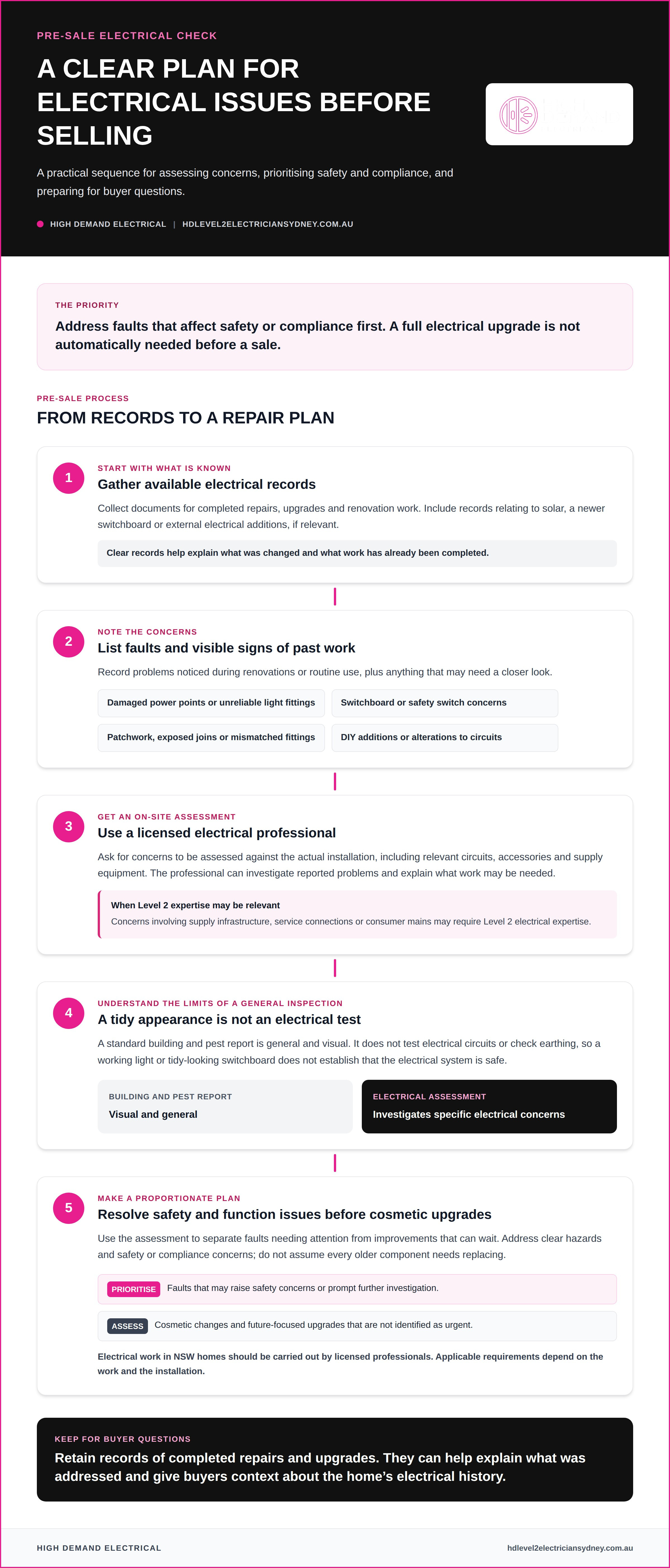
A pre-sale building and pest inspection can identify visible property concerns, but its report is general and visual. It doesn’t test electrical circuits or check earthing. That leaves an important gap: a tidy-looking switchboard or working light doesn’t establish that the electrical system is safe. Buyers may also commission their own inspection, and visible defects can become a focus for negotiation if their report raises concerns.
A targeted electrical review helps separate sale-relevant repairs from upgrades that can wait. A licensed professional can assess visible defects and investigate specific concerns, such as a damaged accessory, an unreliable light fitting or an ageing switchboard. Homes in established Sydney suburbs may have electrical work completed in stages over decades, so a visual walk-through may not explain every alteration. A pre-sale review gives the owner a clearer basis for deciding what needs attention before listing.
Balance repair decisions against likely sale returns by prioritising safety and function, not full modernisation. A fault that could raise a safety concern or prompt further investigation deserves attention before a cosmetic upgrade. By contrast, replacing a working fixture for a minor flaw is unlikely to meaningfully affect the sale price. The sensible sequence is to identify the defect, understand the work required, then weigh that work against the risk of buyer objections or price pressure.
For owners fixing electrical issues before selling a house in Sydney, this means avoiding both extremes: ignoring visible faults and upgrading every older component. Resolve clear hazards and faults first; leave future-facing improvements off the urgent list unless an assessment identifies a reason to proceed. A Level 2 electrical assessment in Sydney can help where concerns involve supply infrastructure, consumer mains or other Level 2 electrical work.
Keep records of completed repairs and upgrades, especially after renovation work or changes to external electrical equipment. Clear documentation can help explain what was addressed if a buyer asks questions. Fixing obvious problems before marketing can reduce inspection objections and keep discussions focused on the property, rather than unresolved electrical concerns.
2. What is the value of getting electrical advice before selling?
For NSW homes, electrical work should be left to licensed professionals, and an assessment can identify safety or compliance concerns. The relevant requirements depend on the work and the installation, so advice should address the actual circuits, accessories and supply equipment involved. This gives you a clearer basis for deciding what needs attention before listing.
An on-site review can distinguish a fault requiring repair from an upgrade that can wait. That matters in older homes, where wiring and additions may have accumulated across decades. A licensed professional can assess the visible installation, investigate reported problems and explain what work is needed. If the concern involves supply infrastructure or consumer mains, the assessment may need Level 2 electrical expertise.
Uncertified or DIY electrical additions deserve careful attention. An extra power point, altered light circuit or improvised connection may look functional while raising questions about safety and workmanship. Older Sydney homes can contain unearthed circuits or additions completed without a compliance certificate. Don’t assume a working switch or light proves the underlying circuit is sound; an assessment can establish whether further investigation or rectification is needed.
Visible patchwork can also unsettle buyers. Different fittings, exposed joins, mismatched covers or signs of repeated alterations may suggest unresolved work, even when each item appears minor. A professional can assess whether the visible condition reflects a functional issue or simply an untidy finish. That distinction helps avoid spending on cosmetic changes when the priority is a genuine electrical fault.
Records give buyers useful context. Keep documents describing completed repairs, upgrades and renovation work, particularly where the home has solar, a newer switchboard or external electrical additions. Clear records help explain what was changed and when, rather than leaving buyers to infer the system’s history from visible fittings. If paperwork is incomplete, an assessment can help clarify the present condition, but it doesn’t replace records for work already completed.
A practical pre-sale process is to gather available electrical documents, identify concerns raised during renovations or routine use, then arrange an on-site assessment. The professional can examine relevant equipment, explain identified risks and outline the work needed. This creates a more informed repair plan before marketing, rather than reacting to a buyer’s report after an offer.
For concerns involving service connections, supply equipment or other Level 2 work, arrange an electrical assessment before listing. A documented review can help you make decisions based on the home’s actual electrical condition.
Electrical work in NSW homes should be carried out by licensed professionals, with applicable requirements depending on the work and installation. Work involving supply infrastructure or consumer mains may require Level 2 electrical expertise, and additions should be checked for safety and compliance.
Having a professional check lights and other fixtures before listing
A professional check can identify faulty lights and fittings before buyers view the property. The review should cover whether each light operates, whether a fitting appears damaged and whether a reported problem needs further assessment. A dark room may simply need a new bulb, but a persistent issue at the fitting deserves a closer look. A clear assessment helps separate a straightforward presentation task from electrical work.
Ask for attention to the fixtures buyers are likely to notice during a walkthrough: kitchen and bathroom lights, hallway fittings, bedroom switches and external lights. A fitting that flickers, fails to operate or has visible damage can draw attention away from the room. A professional can assess the fitting and explain whether repair or replacement is appropriate. That approach avoids treating every cosmetic imperfection as a reason for an upgrade.
Function matters alongside appearance. Before listing, have a professional check that lights, doors, windows and appliances operate properly. A broken light fitting can affect a room’s liveability, while a working fitting with a minor flaw may not warrant replacement. An assessment helps clarify the difference, so the work can focus on function rather than a broad refresh of every fixture.
Lighting choices can also affect how rooms present. Energy-efficient lighting may improve a home’s energy efficiency, but a full lighting upgrade is not automatically necessary before sale. A professional can consider the existing fittings, the reported issues and the proposed work. For example, a seller planning to replace one damaged kitchen fitting can address that concern without replacing working bedroom lights.
Keep the scope practical. Have the professional identify the affected fitting, describe the issue and record any repair completed. If a light works but looks dated, weigh its condition against likely buyer response and other priorities around the home. Replacing properly working fixtures solely for minor flaws is unlikely to significantly affect the sale price, so a cosmetic purchase should not displace attention from a genuine fault.
A focused check before photography and open inspections gives you time to resolve identified faults and present each room clearly. It also helps avoid discovering a non-functioning light during a buyer’s visit. The useful outcome is a clear distinction between fittings that need attention and those that remain serviceable, leaving decisions about appearance and further upgrades grounded in the property’s actual condition.
4. Disclosure of property defects to prospective buyers
Electrical defects can affect what buyers understand about a property before purchase. A damaged power point, exposed wiring or a faulty solar system may signal deferred maintenance, safety concerns or future costs. In most Australian states, sellers must provide potential buyers with specific property details upfront so they can make an informed decision. Electrical problems are among the defects that may need disclosure.
For a Sydney sale, don’t assume that repairing a fault removes the need to keep a clear record of it. A switchboard repair, wiring rectification or replacement of a damaged fitting can change the condition, but buyers may still ask what work occurred. Keep reports, invoices and documents describing completed repairs or upgrades together. They can help explain the issue, the work undertaken and the resulting condition.
Be precise when describing known concerns. If a light fitting was faulty and later repaired, distinguish the original problem from the completed work. If a solar system appears faulty or underperforming, don’t present it as an uncomplicated selling feature. Explain the known issue and retain any relevant assessment or repair records. Clear, consistent details help buyers understand what they are considering.
A building and pest report may identify visible concerns, but it doesn’t test electrical circuits or check earthing. If an inspection notes a damaged accessory or raises a question about electrical work, use the report to identify the concern, then obtain an electrical assessment where needed. That gives you specific information to support the property’s description, rather than relying on assumptions about what a visual inspection established.
Disclosure is distinct from a decision to repair. A known defect may require attention for safety, while another issue may remain unresolved when the property is marketed. Buyers need accurate information about the condition either way. Failing to disclose property problems can lead to legal issues and costly fines; in Australia, a buyer may be able to terminate a sale if problems weren’t disclosed. Avoid broad statements such as “all electrical work is compliant” unless the available records support them.
Before listing, organise records by issue: assessment findings, repair details and documents for upgrades or renovation work. Check that descriptions in marketing and sale documents match the property’s actual condition. If a buyer asks about a past electrical fault, answer consistently with the records and disclose relevant known information properly. Accurate disclosure helps buyers assess the home with fewer unanswered questions and reduces the risk of disputes over what was represented.
Having electrical hazards assessed and addressed before selling
Electrical faults deserve prompt attention because they can create safety risks, not just inspection objections. Wiring, power points and lighting should be assessed if damaged, unreliable or visibly altered. A cracked power point, exposed wiring or light that repeatedly fails needs more than a cosmetic fix. Keep people away from a suspected hazard and arrange assessment by a licensed electrician before marketing the property.
Start with the concerns most likely to affect safe use or raise questions during a viewing. These can include an outdated switchboard, incomplete safety switch protection, damaged accessories, visible external faults and smoke alarm concerns. A professional assessment can establish which items need repair and which simply need explanation. That helps focus the work on identified hazards rather than automatically replacing every older fitting.
Age can make a dedicated assessment especially useful. For a pre-1980s Sydney home, arrange an electrical inspection by a licensed electrician. Older wiring, unearthed circuits or additions completed at different times can be difficult to assess from surface appearance alone. A standard visual building report does not test circuits or check earthing, so it cannot answer every electrical safety question.
External equipment also needs attention where it shows visible damage or deterioration. For example, a fault affecting the service connection or consumer mains may require specialist electrical assessment, rather than a cosmetic repair. A power pole on the property can also raise ownership and maintenance questions. Establishing the nature of an external fault helps determine the appropriate work before buyers encounter it during an inspection.
Solar equipment calls for a clear, evidence-based approach. A system that appears faulty, unsupported or underperforming can become a buyer concern instead of a selling point. Have the issue assessed and retain relevant repair or inspection records. If the problem remains, make sure the property information accurately reflects what’s known. Avoid describing a system as fully functional if its performance is in doubt.
Prioritise immediate hazards before presentation work. A five-figure bill after purchase is a possible surprise when significant electrical problems go undiscovered, so unresolved concerns deserve attention before settlement discussions. The objective isn’t to modernise the whole property. It’s to identify hazards, arrange appropriate repairs and keep records that explain completed work. That gives buyers a clearer picture of the home’s electrical condition.
If a switchboard, service connection or external electrical fault needs assessment, arrange an electrical assessment before listing. Clear findings help you prioritise safety-related work and prepare accurate information for prospective buyers.
High Demand Electrical
High Demand Electrical can help assess electrical concerns before you list, particularly when they involve a switchboard, supply connection or private power pole. Its Level 2 ASP Electrical Services cover electrical infrastructure issues, while Switchboard Upgrades address switchboard concerns that may need rectification. The right scope depends on the fault identified and the work required, not simply the age of the home.
If the assessment identifies a specific infrastructure issue, such as a private power pole concern, the relevant work can be considered alongside your pre-sale priorities. This helps you focus on safety and documented defects rather than upgrading unrelated parts of the property.
Contact High Demand Electrical to discuss electrical work before your Sydney property goes to market.
Set your sale preparation in motion
Choose your next step based on the property’s specific electrical concerns, not a blanket plan to replace every older fitting. If you’re planning to fix electrical issues before selling a house in Sydney, arrange the work early enough to address identified faults and organise records before prospective buyers inspect the home.
High Demand Electrical offers Level 2 ASP Electrical Services, Switchboard Upgrades and Private Power Pole Installation for relevant electrical and supply infrastructure work. These services can help where an assessment points to a switchboard or private pole concern, rather than cosmetic changes alone.
Keep the focus on a safe, accurately represented property. Contact High Demand Electrical for advice about electrical work to consider before your sale. A clear next step can help you prepare with confidence.
Frequently Asked Questions
Is a switchboard problem a big concern during a sale?
It can be, particularly if the board appears damaged, unreliable or inadequate for safe operation. Buyers may ask whether the concern affects protection, available capacity or the cost of future work. A professional assessment can distinguish a functional fault from an older-looking enclosure that still operates properly. That distinction helps you respond to questions without assuming that every dated switchboard needs replacement.
Should a homeowner fix electrical issues before listing?
Address known hazards and faults before listing where practical, especially if they affect everyday use or raise safety concerns. A loose power point, for example, deserves attention beyond a fresh cover or paint touch-up. You don’t need to treat every dated fitting as urgent. Decide based on the condition and function of the installation, then keep clear records of work completed for buyer enquiries.
What electrical issues commonly delay a home sale?
Faults that prompt further investigation can slow buyer decisions. Examples include a power point that doesn’t operate, lights that repeatedly fail, exposed or visibly damaged wiring, and concerns raised about a switchboard or external supply equipment. A buyer may want clarification before proceeding. Having an assessment and a clear record of any rectification ready can help answer specific questions without leaving the issue unresolved during negotiations.
What is the value of getting electrical advice before selling?
Electrical advice gives you a clearer basis for deciding what needs repair and what can remain unchanged. For instance, if a buyer’s report notes an electrical concern, a professional assessment can explain its condition and the work required. This can help you respond with relevant findings rather than assumptions. Keep the assessment with renovation and repair records so the information is ready if prospective buyers ask.
Why do buyers notice electrical issues so quickly?
Electrical details are often visible during a viewing, and buyers may also test ordinary fixtures as they consider how the home functions. A cracked switch plate, a light that won’t turn on or untidy visible wiring can prompt questions about maintenance. These observations don’t prove a wider system fault, but they can lead buyers to seek more information before making a purchase decision.
What electrical issues should be fixed before selling a house in Sydney?
Prioritise defects that affect safe operation, such as damaged wiring or accessories, faulty lighting, and switchboard or supply concerns identified during assessment. The right scope depends on the fault, not simply the property’s age. A full upgrade isn’t automatically necessary. Ask for the identified issue and recommended work to be clearly explained, then retain records of any repairs completed before the property is marketed.
Is an electrical safety inspection required when selling a house in NSW?
A separate electrical safety inspection is not established as a blanket requirement for every NSW home sale. However, a general building and pest report is visual and doesn’t test electrical circuits or check earthing. If you know of a fault or a buyer raises a specific concern, a targeted assessment can clarify the condition and help you provide accurate information.
Who can legally inspect and repair residential electrical wiring in Sydney?
Electrical wiring should be inspected and repaired by a licensed electrical professional, not through DIY work. If the concern involves network-connected equipment, service lines, metering or connections, Level 2 ASP expertise may be relevant. These tasks differ from ordinary internal wiring repairs. A clear description of the issue helps identify whether it concerns the home’s wiring or the supply infrastructure serving the property.
Need Help Fast?
Powering Your Needs with Expertise
If you’re looking for a reliable, experienced, and prompt electrician, look no further than High Demand Electrical. We cater to all your electrical needs, from routine maintenance to emergency repairs and complete system installations. Our skilled team is committed to providing professional service that ensures your electrical systems run smoothly. Whether it's a small task or a large project, give us a call today. Let us meet all your electrical demands with the quality and reliability you deserve.

Licensed Level 2 ASP electricians across Sydney. Same-day service and 24/7 emergency response.
Licence 397193C
ABN 87 051 836 527