Electrical Defect Notice: Understand the Risks and Deadlines
An electrical defect notice is a safety warning with a deadline, not paperwork to set aside. In Australia, listed defects usually need to be fixed within 21 days to help prevent power disconnection, although some Sydney notices allow up to 30 days. The due date on your notice matters, and an immediate danger can lead to disconnection before that deadline.
It’s understandable to want a clear explanation before arranging repairs. The risk of ignoring an electrical defect notice includes possible power disconnection, fire or electric shock. Read the notice to understand the identified issue, required action and deadline. This article explains why notices are issued and what can happen if a defect remains unresolved.
You’ll also learn how repairs and compliance documentation fit into the process, and when a Level 2 electrical service may be relevant. The aim is to help you respond promptly and make sense of the notice without adding to the stress.
Key Takeaways
• Read the defect notice closely to identify the fault, required repair and due date.
• In Australia, listed defects usually need to be fixed within 21 days, though some Sydney notices allow up to 30 days.
• Understand how unresolved defects can put safety at risk and lead to power disconnection.
• Learn how a Certificate of Compliance for Electrical Work helps document completed repairs and notify the electricity provider.
• Recognise common warning signs, including damaged power poles, exposed wiring and unsafe overhead lines.
What Is an Electrical Defect Notice?
An electrical defect notice identifies a fault, safety risk or non-compliant work affecting a property’s electricity supply. In NSW, a network provider can issue one after an inspection or when it detects a problem. The notice describes the issue and may set a repair timeframe, particularly if the defect creates a safety concern.
There isn’t one nationally uniform notice type for every state and territory. Names, issuing arrangements and rectification processes depend on the jurisdiction and electricity provider. In NSW, providers such as Ausgrid and Endeavour Energy issue notices for unsafe or non-compliant electrical installations. Check the notice for the issuing authority, defect details, deadline and any instructions about the supply.
Responsibility depends on which equipment is defective and where it sits in the network. In Sydney, under Ausgrid’s ownership split, the property owner is responsible for electrical connection equipment from the point of attachment into the home. A distributor may issue the notice, but that doesn’t automatically make it responsible for repairing equipment on the owner’s side. Landlord and tenant responsibilities can depend on the property arrangement and the equipment identified.
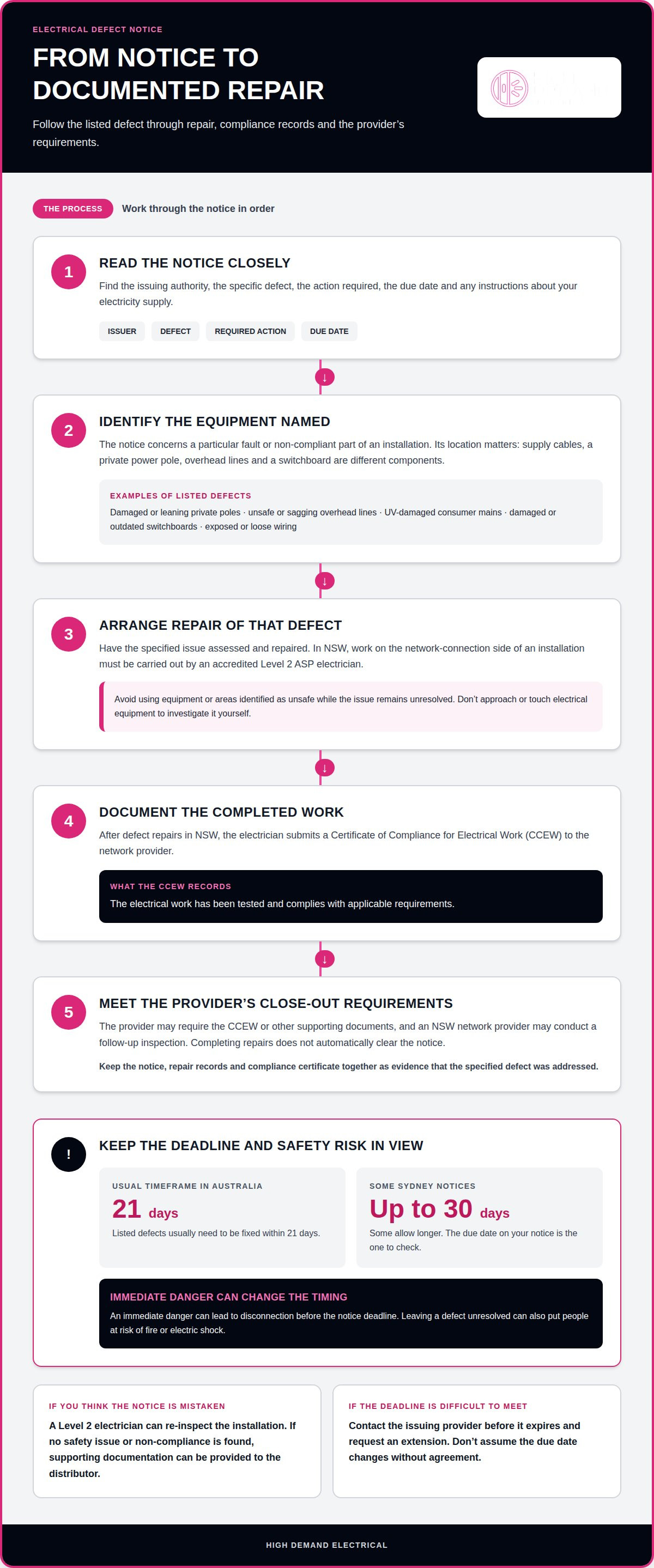
Arrange repairs that address the specific defect described, rather than treating the notice as a general inspection request. A supply-side issue may involve private power equipment or other connection infrastructure. After defect repairs in NSW, the electrician submits a Certificate of Compliance for Electrical Work (CCEW) to the network provider. The certificate records that the electrical work has been tested and complies with applicable requirements.
Completing repairs doesn’t automatically clear the notice. The provider may require the CCEW or other supporting documents, and an NSW network provider may conduct a follow-up inspection. Keep the notice, repair records and compliance certificate together. An insurer or the authority that issued the notice may also require a certificate. These records help show that the specified defect was addressed.
If you believe the notice is mistaken, a Level 2 electrician can re-inspect the installation. Where no safety issue or non-compliance is found, supporting documentation can be provided to the distributor. If the deadline is difficult to meet, contact the issuing provider before it expires and request an extension; don’t assume the due date changes without agreement. Avoid using equipment or areas identified as unsafe while the issue remains unresolved.
Unresolved notices can complicate a property sale or rental because the defect and its repair status may need to be addressed during the transaction or tenancy. A buyer, landlord or property manager may need evidence of completed repairs, such as the CCEW. For supply-related faults, electrical defect notice rectification can help address the listed work and its compliance documentation.
Common causes of electrical defect notices
An electrical defect notice identifies a particular fault, hazard or non-compliant part of an installation. In Sydney, the issue may involve equipment carrying electricity from the network to a property, or electrical equipment at the property. The condition and location matter: a damaged connection, exposed cable and outdated switchboard each need a different assessment. The notice description helps identify the component requiring attention.
Examples of defects that may prompt a notice include:
Private power poles
Damage, age, leaning or rust can affect a pole supporting electrical cables.
Overhead service lines
Unsafe or sagging lines can present a hazard, especially near vegetation.
Consumer mains
UV damage can affect exposed cables supplying a property.
Switchboards
An outdated or damaged board may be flagged if it creates a safety concern.
Wiring
Exposed or loose wiring can increase the risk of electric shock or fire.
Electrical work that doesn’t follow Australian safety standards can also be identified as non-compliant. For example, work by an unlicensed contractor may result in unsafe wiring or connections. A certificate for earlier work doesn’t establish that every electrical component remains safe. The notice concerns the condition identified during an inspection or detection.
Visible warning signs can include flickering lights, breakers that trip repeatedly, exposed cables, or a leaning or rusted power pole. Vegetation close to overhead lines is another potential concern. These signs don’t mean a notice will necessarily be issued, but they do warrant an electrical assessment. Don’t approach or touch electrical equipment to investigate it yourself.
The component named in the notice helps distinguish the hazard from unrelated electrical work. For example, a notice about consumer mains concerns supply cables, while a switchboard issue involves a different part of the installation. A regular building inspection can’t test electrical circuits, remove switchboard covers or touch wiring. A full electrical safety inspection by a licensed electrician can assess wiring, connections and switchboard components.
For work involving the network-connection side of an installation in NSW, an accredited Level 2 ASP electrician is authorised to carry out that work. Keep people clear of any equipment identified as unsafe, then arrange an assessment that addresses the specific defect. The defect notice rectification process focuses on the listed fault and required compliance evidence. If a defect needs assessment, contact the electrical team with the notice details.
Consequences of ignoring a notice
Leaving a listed electrical defect unresolved can affect safety and continuity of supply. The consequences depend on the defect, the level of danger and whether the notice deadline passes.
Fines, Penalties and Liability
Ignoring a defect notice can expose a property owner to fines and other consequences, while an unresolved hazard can increase the risk of fire or electric shock. Electrical defect requirements in NSW can depend on applicable safety and supply rules. The exact consequences depend on the notice, the defect and the circumstances.
Responsibility matters when the defect involves equipment the owner controls. For example, unsafe wiring or a damaged connection on the property may leave the owner facing practical and safety consequences if it remains unaddressed. A distributor issuing the notice doesn’t automatically become responsible for repairing equipment on the property side of the connection.
Consequences of Missing a Deadline
Missing the due date can allow an NSW network provider to disconnect the property’s electricity supply if listed defects remain unrepaired. If a defect poses immediate danger, disconnection may happen before the stated deadline. This can disrupt household routines and affect essential electrical installations.
Disconnection doesn’t remove the defect. Repairs and the provider’s required compliance evidence are still needed to resolve the supply issue. A follow-up inspection may also check that the defect has been addressed.
The risk of ignoring an electrical defect notice goes beyond missing a deadline. Exposed wiring can create an electric shock hazard, while a serious problem with overhead equipment or a private power pole may endanger people nearby. Using equipment identified as unsafe can expose occupants to the hazard described in the notice.
Power loss can affect more than lighting. Refrigeration, heating, communications and other electrical equipment may stop working if supply is disconnected. A business or household that relies on particular installations may need to make alternative arrangements while repairs are completed and the supply process is resolved.
Delay can also complicate decisions about a property. An unresolved notice may raise questions during a sale, tenancy or property-management handover, particularly if there’s no record that the named defect was repaired. Keep the notice and repair documentation together so the work’s status is clear to those managing or occupying the property.
If the notice identifies an immediate hazard, keep clear of the affected area or equipment and arrange action without delay. For other listed defects, treat the due date as a firm deadline, not a suggested target. Prompt repairs and the required compliance documents help address both the safety issue and the risk of interrupted supply.
Electrical defect notice deadlines and power disconnection
The notice’s stated due date is the key date for arranging rectification. In Australia, listed defects usually need repair within 21 days, while some Sydney notices allow up to 30 days.
Acting by the Notice Deadline
The repair deadline is the date by which the listed defect must be rectified to help prevent disconnection. Arrange the required work promptly, as damaged cables or other supply equipment may need assessment and repair before compliance can be confirmed.
Use the notice to identify the defect, required action and due date. Keep the issuing provider’s details available, and contact it promptly if the notice’s instructions need clarification. Don’t treat the usual 21-day period as a substitute for the date printed on your notice.
NSW Rectification Deadlines
In NSW, the rectification period depends on the notice: listed defects commonly have a 21-day timeframe, while some Sydney notices allow up to 30 days. The due date and defect details set the practical deadline for each property.
Arrange repairs early enough to complete the work and provide the required compliance information to the network provider. A damaged power pole, outdated equipment or affected cables may each require different work, so read the defect description carefully. Keep a record of communications and completed repairs.
Defect Classifications
Defect classifications indicate the seriousness and urgency of the electrical issue. A Category 1 safety defect may require immediate action, particularly if the problem creates immediate danger.
“Urgent” and “non-urgent” indicate different priority levels, but they don’t set a universal deadline across NSW. Follow the timeframe and directions on the notice. If the defect is marked immediate or appears dangerous, keep clear of the affected equipment and act without delay.
Power Disconnection
Power disconnection is possible if listed defects remain unrepaired by the due date. An electricity distributor may also disconnect supply before the deadline if the defect poses immediate danger.
Disconnection can happen while the defect is still present, so completing repairs and meeting the provider’s requirements remain essential. An NSW network provider may conduct a follow-up inspection to check that the issue has been resolved. Don’t assume that booking the work alone clears the notice.
After repairs, the electrician submits a Certificate of Compliance for Electrical Work to the network provider in NSW. Keep the certificate and repair records available, and follow any inspection instructions from the provider. These steps document the completed rectification and help establish whether further action is required before the notice is cleared.
If the deadline is approaching, prioritise the defect named in the notice and keep communication with the issuing provider focused on repairs and compliance. A notice about an unsafe supply connection needs attention according to its specific directions, not assumptions based on another property’s timeframe.
Electrical defect notice meaning and purpose
An electrical defect notice is a formal warning identifying an electrical fault, safety risk or non-compliant installation. In NSW, it tells the property contact what issue a network provider has found and may set a timeframe for repairs. Its purpose is to make the hazard and required response clear so the defect can be addressed before it causes harm or interrupts supply.
The notice distinguishes a specific defect from a general concern about an electrical system. For example, it may identify unsafe equipment connected to the supply, rather than suggesting every circuit inside a home is defective. Read the description and instructions together. The named component, location and stated risk indicate what needs attention.
This distinction matters because different defects require different assessments. A damaged service connection, outdated switchboard and unsafe wiring are not interchangeable problems. A switchboard upgrade may be relevant if the notice identifies the switchboard, but it won’t resolve a fault elsewhere. Repairs need to address the issue recorded by the provider.
In Sydney, Ausgrid and Endeavour Energy are examples of network providers that can issue notices for unsafe or non-compliant electrical installations. A network technician may issue a notice during a scheduled inspection or after detecting a problem. It communicates the finding and gives the property contact a basis for arranging assessment, repairs and any required compliance information.
For work involving the network-connection side of an installation in NSW, only an accredited Level 2 ASP electrician is authorised to carry it out. That matters when a notice concerns electrical equipment connected to the network, rather than a fault confined to an appliance. A full electrical safety inspection must be carried out by a licensed electrician, who can test the installation and identify relevant concerns safely.
Treat the notice as a focused safety document, not a repair plan for every part of the property. Use its wording to identify the affected equipment and the provider’s requirements. For example, if the notice points to an overhead connection, an unrelated internal repair won’t clear that defect. Clear identification keeps the work and compliance response relevant.
A notice can help organise communication between the property owner, electrician and electricity provider. The stated defect gives everyone a shared reference for discussing the work and its completion. After repairs, the required certificate or other documentation can help the provider assess whether the issue has been resolved.
If the notice names a supply connection or another network-related defect, arrange an assessment that matches the equipment identified. Discuss the electrical defect and required repair so the next step is aligned with the notice.
High Demand Electrical
High Demand Electrical can help address electrical defects involving supply connections and infrastructure. Its Level 2 ASP Electrical Services are relevant when a notice concerns the network-connection side of an installation, while switchboard upgrades or private power pole installation may suit defects involving those components. The work required depends on the issue identified in the notice.
Share the notice details when discussing the next step, including the defect description, due date and any provider instructions. This helps keep the assessment focused on the listed fault and the compliance response required after repairs. If the notice relates to a power pole, switchboard or supply connection, contact High Demand Electrical to discuss the defect.
Make your next step deliberate
Turn the notice into a clear action record: who is coordinating the work, what information the provider still needs and how progress will be tracked. Keeping those details together can make communication easier, particularly when ownership, tenancy or property-management responsibilities overlap.
The risk of ignoring an electrical defect notice includes leaving the fault unresolved, and uncertainty about who is acting can delay a response. Set out the next action and responsible person, then keep relevant correspondence with the notice. If the defect affects supply equipment or needs specialist electrical assessment, discuss the notice and required work directly with High Demand Electrical.
Contact High Demand Electrical to discuss your notice and take a clear, considered step towards resolving the issue. You can move forward with a better understanding of what needs attention.
Frequently Asked Questions
What Happens If You Ignore It?
Ignoring a notice can leave the identified electrical hazard unresolved and may lead to power disconnection. The danger depends on the fault: exposed wiring can create shock or fire risks, while a compromised supply connection may affect safe electricity delivery. Avoid using equipment the notice identifies as unsafe. Arrange assessment and repairs according to the notice, and keep records of completed work and communications about the defect.
Why do you need an electrical inspection?
An electrical inspection can identify faults that aren’t obvious during ordinary use, such as damaged connections, heat damage or switchboard problems. A licensed electrician can test switches and power points, inspect the switchboard and safety switches, and assess wiring and connections. Flickering lights or repeatedly tripping breakers warrant attention, but a standard building inspection doesn’t test electrical circuits or inspect wiring.
What is an electrical defect notice in Australia?
An electrical defect notice is a formal warning that records an electrical fault, safety concern or non-compliant installation. In NSW, providers such as Ausgrid and Endeavour Energy may issue notices after finding a problem during an inspection or through other detection. The document identifies the defect and may set a repair timeframe. Read its instructions carefully: the listed equipment and deadline shape the response required.
How quickly must an electrical defect be repaired under Australian state and territory rules?
There isn’t one repair timeframe in the information available for every Australian state and territory. Listed defects usually need repair within 21 days, while some Sydney notices allow up to 30 days. In NSW, use the due date shown on your notice rather than assuming a general timeframe applies. An immediate danger can prompt disconnection before the repair deadline, so act according to the notice’s urgency.
What happens if an electrical defect notice is ignored or not fixed by the deadline?
If a listed defect remains unrepaired after its due date, an NSW network provider can disconnect the property’s electricity supply. A serious unresolved fault can also expose occupants to fire or electric shock hazards. The provider may conduct a follow-up inspection to assess whether the defect has been resolved. Keep repair documents available, because completing the work and documenting it are separate parts of the process.
Can electricity be disconnected or refused connection because an electrical defect notice is unresolved?
In NSW, a network provider can disconnect power if listed defects aren’t repaired by the notice’s due date. If the defect poses immediate danger, an electricity distributor may disconnect supply earlier. The available information establishes disconnection as a possible consequence, not a general rule about refusing a new connection. Follow the notice’s directions and address the defect before relying on continued supply.
What are the safety risks of ignoring an electrical defect notice, including fire, electric shock, or injury?
Risks include electric shock and fire, particularly if the notice identifies exposed or loose wiring, unsafe overhead lines or damaged connection equipment. A leaning or rusted power pole can also indicate a hazard around the property’s supply. Don’t approach or handle equipment identified as unsafe, and keep people clear of the affected area. Have the named defect assessed and repaired before using affected equipment again.
How do you get an electrical defect repaired, inspected, and cleared by a licensed electrician?
Arrange an electrician to assess the component named in the notice and complete the required repairs. In NSW, work on the network-connection side must be carried out by an accredited Level 2 ASP electrician. After repairs, the electrician submits a Certificate of Compliance for Electrical Work to the network provider. Retain your records and follow any provider requirements, including a possible follow-up inspection, to document resolution.
Need Help Fast?
Powering Your Needs with Expertise
If you’re looking for a reliable, experienced, and prompt electrician, look no further than High Demand Electrical. We cater to all your electrical needs, from routine maintenance to emergency repairs and complete system installations. Our skilled team is committed to providing professional service that ensures your electrical systems run smoothly. Whether it's a small task or a large project, give us a call today. Let us meet all your electrical demands with the quality and reliability you deserve.

Licensed Level 2 ASP electricians across Sydney. Same-day service and 24/7 emergency response.
Licence 397193C
ABN 87 051 836 527
