DIY Electrical Dangers Australia: What's Safe at Home
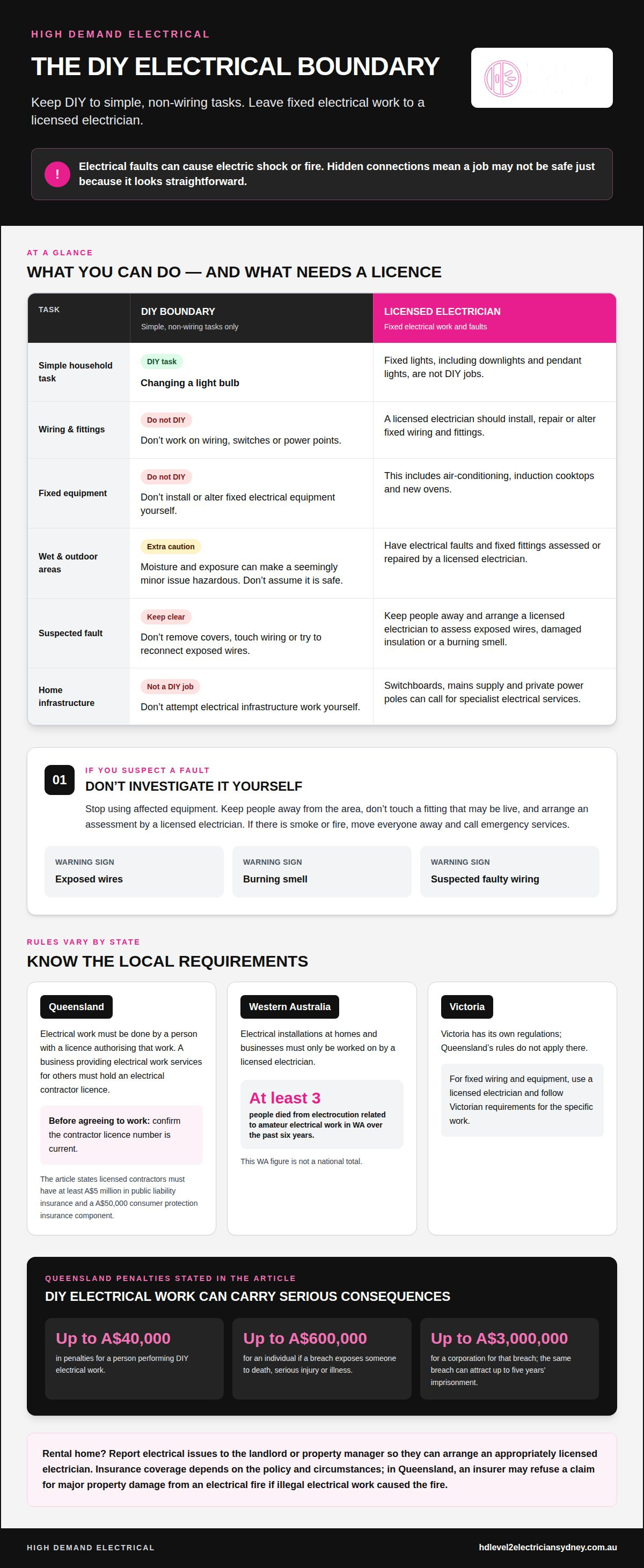
The safest rule is clear: keep DIY to simple tasks such as changing a light bulb, and leave wiring, switches, power points and fixed lights to a licensed electrician. The DIY electrical work dangers in Australia include electric shock and fire, and wet or outdoor areas make it especially important not to assume a job is safe just because it looks straightforward.
It’s understandable to want to handle a small fix yourself, especially when the fault seems easy to reach. But electrical work can involve hidden connections and hazards that aren’t obvious from the surface.
This article explains which household tasks are generally safe to do yourself, which need licensed help, and why bathrooms, kitchens and outdoor fittings require extra care. You’ll also learn when work on your home’s electrical infrastructure, such as a switchboard or mains supply, needs a specialist rather than a DIY attempt.
Key Takeaways
• Keep DIY to simple, non-wiring tasks; leave fixed lights, switches, power points and other electrical work to a licensed electrician.
• Wet and outdoor locations need extra caution: moisture and exposure can turn a seemingly minor electrical issue into a serious hazard.
• Unsafe wiring can cause electric shock, and a fault may remain hidden until equipment fails or conditions change.
• Illegal or faulty electrical work can increase fire risk and may affect an insurance claim after major property damage.
• Recognise when work involving a switchboard, mains supply or private power pole calls for specialist electrical services rather than a DIY attempt.
Electrical work requiring a licensed electrician
Electrical work is more than connecting wires. In Queensland, section 18 of the Electrical Safety Act 2002 defines it to include manufacturing, constructing, installing, testing, maintaining, repairing, altering, removing or replacing electrical equipment. That scope captures ordinary home jobs, including changing a power point or light switch.
Across Australia, replacing a switch or power point involves more than matching wire colours. Correct polarity, secure earth connections, spacing and safety requirements all matter. Homeowners should not attempt fixed lighting work, including downlights and pendant lights. The same applies to ducted or split-system air-conditioning work, induction cooktops and new ovens.
• Leave wiring, switches and power points to a licensed electrician.
• Don’t install or alter fixed lights, air-conditioning, cooktops or ovens yourself.
• In Western Australia, electrical installations at homes and businesses must only be worked on by a licensed electrician.
Victoria has its own regulations, so Queensland’s rules don’t apply there. The practical boundary remains clear: don’t carry out electrical installation, repair or alteration yourself. Use a licensed electrician for fixed wiring and equipment, and follow the Victorian requirements for the specific work.
In Queensland, a person doing electrical work must hold an electrical work licence authorising that work. A business providing electrical work services for others must hold an electrical contractor licence. For a job in Queensland, confirm the electrical contractor licence number is current before agreeing to work. Licensed electrical contractors there must have at least A$5 million in public liability insurance and a A$50,000 consumer protection insurance component.
Queensland penalties underline the risk: a person performing DIY electrical work can face up to A$40,000 in penalties. If a breach exposes someone to death, serious injury or illness, the maximum penalty is A$600,000 for an individual or A$3,000,000 for a corporation. The same breach can attract up to five years’ imprisonment.
What rules apply to DIY electrical work in rental properties in Australia? Don’t carry out electrical installation or repairs yourself in a rental home. Report the issue to the landlord or property manager so they can arrange for an appropriately licensed electrician.
Does Australian home insurance cover damage caused by DIY electrical work? Coverage depends on the policy and circumstances. In Queensland, an insurer may refuse a claim for major property damage from an electrical fire if illegal electrical work caused the fire.
Risks of electric shock and unsafe installations
Electricity can injure someone before a fault looks serious. Exposed conductors, damaged insulation and incorrectly connected equipment can all create hazards inside an Australian home.
Hidden electric shock hazards
A hidden electrical hazard is a defect that isn’t obvious from the outside but can make equipment or an installation unsafe. A loose connection behind a wall plate, damaged insulation inside a fitting or incorrect wiring can conceal danger until a fault occurs.
The risk doesn’t end when electrical work appears finished. An installation can become unsafe over time or reveal a problem only when equipment fails. A light that still turns on doesn’t prove its wiring is safe. Don’t remove covers or touch wiring to investigate. Arrange for a licensed electrician to assess suspected faults.
Electric shock can also cause serious injury, particularly if someone contacts an energised part while standing on a conductive or wet surface. Keep children and other occupants away from the suspected area, and don’t handle an appliance or fitting that may be live.
Deaths and injuries from home electrical incidents
A specific Australian warning comes from Western Australia: at least three people died from electrocution related to amateur electrical work over the past six years. One fatal incident involved an unauthorised 240-volt electric fence installed by a family member in Perth’s northern suburbs.
These examples show how a home project can put people beyond the person doing the work at risk. A family member, visitor or tradesperson could encounter an unsafe installation later, without knowing it has been altered. Contact with exposed or faulty electrical equipment can cause injury even when the defect is hidden from view.
The information available here doesn’t provide a count of deaths or injuries for every Australian home incident, so don’t treat the Western Australian figure as a national total. The practical lesson is to treat amateur wiring and unauthorised electrical equipment as hazards, not minor defects to address with another DIY attempt.
Responding to exposed wires and faulty wiring
Exposed wires, a burning smell or suspected faulty wiring need prompt attention, not a DIY repair. Keep people away from the affected fitting or area, don’t touch exposed conductors, and arrange an assessment by a licensed electrician.
A burning smell near a switch, power point or appliance can signal an electrical fault. Stop using the affected equipment. Don’t open the fitting or try to reconnect wires. If there’s smoke or fire, move everyone away and call emergency services.
Describe the location and signs you’ve noticed when arranging help, such as a damaged cable near an outdoor light or a smell beside a power point. This helps identify the affected area without requiring you to inspect or handle wiring. For an electrical infrastructure concern, contact the team for assistance.
Electrical fire risk
DIY electrical faults can create fire and blast hazards, including in Western Australia. The danger may begin inside a fitting or connection, out of sight until smoke, heat or flames appear.
A poor connection can make electrical equipment unsafe, while damaged wiring can expose parts that shouldn’t be touched. A light that still works or a power point that appears intact doesn’t show whether concealed work is safe. A neat finish is no proof that a repair or installation was done correctly.
If a power point becomes discoloured or smells burnt after use, don’t remove its cover or try to tighten wires. Stop using it, keep people away and arrange an electrician’s assessment. A burning smell near a switchboard or fixed appliance also needs prompt attention, even if there’s no visible flame.
Warning signs include scorch marks, crackling sounds, smoke, unusual heat or a burning smell. Stop using the affected fitting or equipment. Don’t touch exposed conductors or open electrical covers to find the fault. If smoke or flames are present, move people away and call emergency services.
Fire risk can extend beyond the person who attempted the work. Other household members may continue using an altered circuit, or a future occupant may not know its wiring was changed. Someone could use a repaired power point without knowing an earlier DIY job left a hidden defect. Keep others away from suspected hazards and tell them which fitting or area is affected.
In Western Australia, DIY electrical work can cause fires and blasts. That risk is one reason not to install, alter or repair electrical wiring yourself. A fault might not be apparent during the work, and later use could expose the problem. An appliance that still operates isn’t proof that its electrical connection is safe.
After an electrical fire, major property damage can raise insurance questions as well as require repairs. In Queensland, an insurer may refuse a claim for major property damage from an electrical fire if illegal electrical work caused it. The circumstances and policy terms matter, so don’t assume a DIY repair will be covered simply because it was inside your home.
If you suspect an electrical fire risk, stop using the affected circuit or equipment if you can do so without approaching the hazard. Don’t restore power or resume use until the fault has been assessed. Keep clear of damaged wiring, and give the electrician specific details, such as a burnt switch or smoke near a power point.
Electrical work in wet or outdoor areas
Bathrooms, kitchens, laundries and gardens combine electrical equipment with moisture. That makes DIY repairs near a shower, sink, washing machine or outdoor tap a poor risk. Water can make contact with electrical equipment more dangerous, while damp floors or soil create additional hazards for anyone working nearby.
In a bathroom, don’t remove a light fitting, exhaust fan or heated towel rail to investigate a fault. Wiring can sit behind a fitting’s cover, even if the visible problem seems minor. Leave installation, repair and alteration to a licensed electrician, and keep people away from damaged equipment until it has been assessed.
Kitchens and laundries also need care. A power point beside a sink, a washing machine connection or a dishwasher installation may involve wiring close to water. Don’t move a fixed appliance to reach wiring, open a power point or try to replace a damaged switch. If a fitting is wet or damaged, stop using it and arrange professional assessment.
Outdoor equipment faces changing conditions. Rain, garden watering and damp ground can affect a light, outlet or cable near a patio, shed or garden bed. Don’t use an extension lead or electrical device that is damaged, exposed to water or lying across wet ground. Keep clear of the area, and don’t handle a cable to test whether it is live.
A pool or spa area isn’t a place to experiment with lighting, pumps or nearby power. Don’t open equipment covers or attempt to reconnect wiring, even if the device appears switched off. Water and wet surfaces can make a fault especially hazardous. Keep others away, don’t use the equipment, and have a licensed electrician assess the issue.
Outdoor repairs can involve fixed wiring, not just a plug or lamp. For example, replacing a wall-mounted garden light may require work on its electrical connection and installation. A loose cable near a private power pole or supply connection is a separate concern. Don’t climb, move cables or attempt a repair. Keep clear and arrange qualified help.
Before work starts, consider whether it involves fixed wiring, a wet area or equipment exposed to the weather. If it does, stop before removing covers or making connections. Tell the electrician where the fitting is, what happened, and whether rain, a leak or garden watering was involved. These details help explain the hazard without requiring you to inspect it.
If you notice a burning smell, exposed conductor or damaged outdoor fitting, keep people away and don’t touch it. In wet conditions, don’t approach the area to switch equipment off. Treat the fault as a safety issue, not a weekend repair, and leave the electrical work to a licensed electrician.
How many deaths and injuries are caused by electrical incidents in Australian homes?
The figures cited here don’t provide a national count of deaths and injuries in Australian homes. The available fatality figure is specific to Western Australia: at least three people died from electrocution linked to amateur electrical work over the past six years. It’s a serious warning, but it isn’t a national total or an injury count.
That distinction matters. A state-level figure describes incidents in that state and period, not every Australian home. It also can’t tell you how many people were injured without a fatal outcome. Don’t treat one regional statistic as a complete measure of household electrical harm across Australia.
Electrical incidents happen in different circumstances, from contact with exposed wiring to unsafe equipment installed during a home project. The consequences depend on the incident and who is exposed. A family member might encounter a hazard after work is finished, while a visitor may not know a fitting or cable has been altered.
Western Australia’s fatality example involved an unauthorised 240-volt electric fence installed by a family member. The case illustrates why electrical hazards aren’t limited to work inside a house. Equipment outside the home can also affect people who didn’t install it and may not recognise the danger.
Injury figures also need careful interpretation. Counts of reported incidents, hospital-treated injuries and workplace events may describe different groups. The information available here gives no comparable Australian household injury total, so don’t use the Western Australian death figure to estimate injuries or national risk.
For households, the practical response is clearer than any single total. Don’t install or alter electrical equipment yourself, and keep people away from suspected faults. If you find exposed wiring or damaged equipment, don’t touch it or attempt a repair. Describe the location and visible signs when arranging professional help.
Take particular care with equipment others may use without knowing its history. A family member might switch on a modified fitting, or a visitor could approach damaged outdoor equipment. Tell household members which area to avoid, and don’t resume use until the electrical hazard has been assessed.
Numbers help show the seriousness of electrical incidents, but they don’t predict what will happen in one home. The Western Australian fatalities are a concrete warning, not a reason to calculate unsupported national totals. If an electrical infrastructure fault puts people at risk, contact the electrical team for assistance.
High Demand Electrical
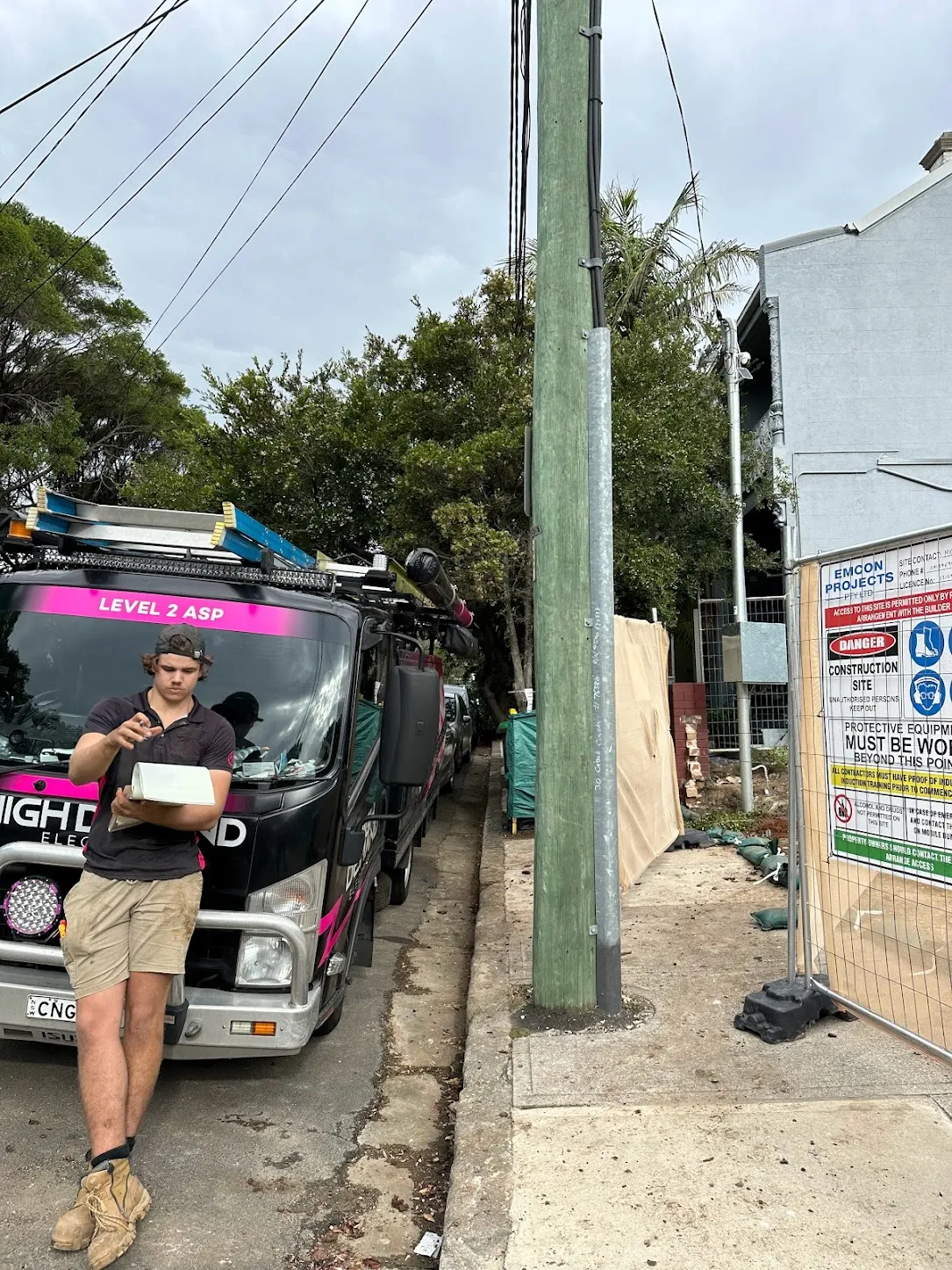
High Demand Electrical helps Sydney homeowners with specialist electrical infrastructure work that should not become a DIY project. Turn to its Level 2 ASP Electrical Services for issues involving supply connections, consumer mains or private power poles, where the work concerns your home’s electrical supply rather than an appliance fault.
For planned upgrades, High Demand Electrical also handles switchboard upgrades and Tesla and home EV charger installation. The right service depends on the part of your electrical system involved, so describe the issue or project clearly when making an enquiry. This gives the team useful context about the work you need.
If a supply connection, switchboard or private power pole needs attention, contact High Demand Electrical to discuss the work.
Make safety part of your next home project
Before starting a home project, consider whether it involves electrical wiring, fixed equipment or the supply connection. If it does, arrange a professional assessment instead of trying to uncover the fault yourself. That decision helps keep an ordinary repair from becoming a shock or fire risk.
The DIY electrical work dangers in Australia are a practical reason to plan before buying materials or opening a fitting. Note where the issue is, what you noticed and whether it changes when equipment is used. Clear details help explain the job and direct attention to the right part of the installation.
For electrical infrastructure concerns, High Demand Electrical provides Level 2 ASP Electrical Services, switchboard upgrades and private power pole installation. These services are relevant when the work involves your electrical supply or related infrastructure, rather than a household appliance fault.
Take the safe next step for your home. Contact High Demand Electrical to discuss the electrical work you need, and move forward with confidence.
Frequently Asked Questions
What Electrical Tasks Are Actually Safe for Homeowners?
Limit DIY to simple tasks that don’t involve wiring, such as changing an accessible light bulb. Switch the light off first, let a hot bulb cool, and don’t remove the fitting’s cover or handle its wiring. If the bulb is difficult to reach, the fitting is damaged, or the light still doesn’t work after replacement, stop and arrange an assessment by a licensed electrician.
What are the penalties?
Penalties depend on the jurisdiction and circumstances. In Queensland, a person performing DIY electrical work can face penalties of up to A$40,000. If a breach exposes someone to a risk of death, serious injury or illness, the maximum penalty is A$600,000 for an individual or A$3,000,000 for a corporation. That serious breach can also attract up to five years’ imprisonment.
What electrical work can homeowners legally do themselves in Australia?
Keep DIY to tasks that don’t involve electrical wiring or altering fixed equipment, such as changing an accessible light bulb. Don’t replace a power point, light switch or fixed fitting yourself. In Queensland, electrical work requires an electrical work licence authorising that work; in Western Australia, home electrical installations must only be worked on by a licensed electrician. Rules differ by state and territory.
What electrical work must be done by a licensed electrician in each Australian state and territory?
Licensing requirements are set by each state and territory, so don’t assume one jurisdiction’s rules apply across Australia. In Queensland, electrical work requires a licence authorising that work. In Western Australia, electrical installations in homes and businesses must only be worked on by a licensed electrician. For fixed wiring, power points, switches and installed lighting, use a licensed electrician rather than attempting the work yourself.
What are the fines or penalties for unlicensed electrical work in Australia?
Queensland’s penalties include up to A$40,000 for a person performing DIY electrical work. Where a breach exposes someone to a risk of death, serious injury or illness, the maximum is A$600,000 for an individual and A$3,000,000 for a corporation. The same serious breach can attract up to five years’ imprisonment. These are Queensland figures, not a national penalty schedule.
What are the main risks of DIY electrical work, including electrocution and fire?
The main DIY electrical work dangers in Australia include electric shock, fire and faults that remain hidden after a job appears finished. A loose connection or damaged insulation can make equipment unsafe, and someone else may encounter the defect later without knowing the wiring was altered. Wet or outdoor locations add particular risks. If you notice exposed wires, scorching or a burning smell, keep clear and arrange professional help.
Need Help Fast?
Powering Your Needs with Expertise
If you’re looking for a reliable, experienced, and prompt electrician, look no further than High Demand Electrical. We cater to all your electrical needs, from routine maintenance to emergency repairs and complete system installations. Our skilled team is committed to providing professional service that ensures your electrical systems run smoothly. Whether it's a small task or a large project, give us a call today. Let us meet all your electrical demands with the quality and reliability you deserve.

Licensed Level 2 ASP electricians across Sydney. Same-day service and 24/7 emergency response.
Licence 397193C
ABN 87 051 836 527
