Common Electrical Defects in Old Sydney Homes and Their Warning Signs
An older Parramatta home doesn’t automatically need a full rewire. Common electrical defects in old Sydney homes include ageing or damaged wiring, flickering lights across rooms, outlets that buzz or feel unusually hot, and safety switches or breakers that keep tripping. These signs need assessment by a licensed electrician, who can identify the fault and check the condition of the installation.
It’s understandable to wonder whether a fault is minor or a warning of a more serious problem. Knowing what to look for helps you respond safely without guessing about the condition of your home’s wiring.
This guide covers warning signs of deteriorating wiring, lighting faults, damp-related electrical problems and limited safety-switch protection. It also explains when to stop using an affected circuit and call a licensed electrician.
Key Takeaways
• Flickering lights, buzzing outlets and repeated breaker trips can point to faults that need professional assessment, not guesswork.
• Older wiring and ceramic fuses can signal an outdated electrical system, but age alone doesn’t mean a whole-home rewire is needed.
• A safety switch may protect only some circuits. Learn what to look for and why regular testing matters.
• Moisture can contribute to electrical faults and repeated safety-switch trips. Treat water near electrical fittings as a warning sign.
• Know when to stop using an affected circuit and call a licensed electrician, especially if an outlet is hot, sparking or buzzing.
Are safety switches required in older homes?
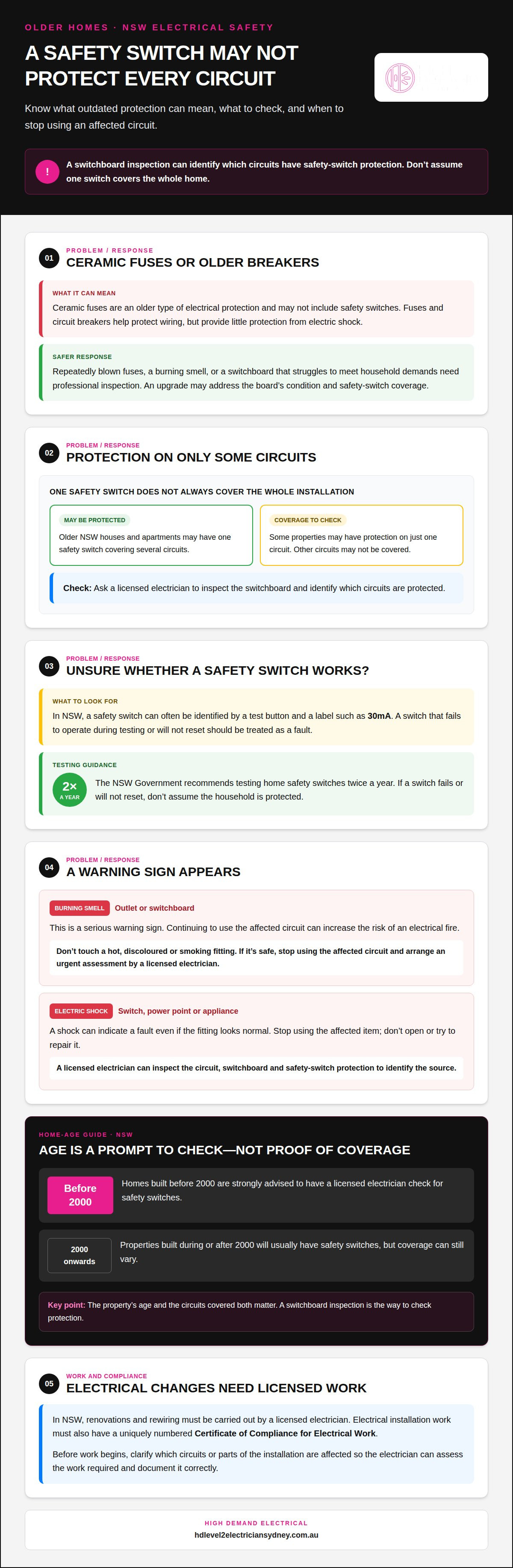
Older homes may have ceramic fuses or circuit breakers without safety switches, leaving people less protected from electric shock. In NSW, the property’s age and the circuits covered both matter when assessing protection.
Outdated switchboards and ceramic fuses
A switchboard with ceramic fuses is an older type of electrical protection and may not include safety switches. Fuses and circuit breakers help protect wiring, but provide little protection from electric shock. Repeatedly blown fuses, a burning smell or a switchboard that struggles to meet household demands need professional inspection. An upgrade may address the switchboard’s condition and safety-switch coverage.
Safety switches and electric shock protection
A safety switch monitors electrical current and cuts power when it detects current leaking to earth. This rapid disconnection can reduce the risk of a serious shock, but one safety switch may not protect every circuit. Older NSW houses and apartments may have one safety switch covering several circuits, or protection on just one circuit. A switchboard inspection can show which circuits are protected.
In NSW, renovations and rewiring must be carried out by a licensed electrician. Electrical installation work must also have a uniquely numbered Certificate of Compliance for Electrical Work. Before work begins, clarify which circuits or parts of the installation are affected so the electrician can assess the work required and document it correctly.
A burning smell from an outlet or switchboard is a serious warning sign. Continuing to use the affected circuit can increase the risk of an electrical fire. Don’t touch a hot, discoloured or smoking fitting. If it’s safe, stop using the affected circuit and arrange an urgent assessment by a licensed electrician.
In NSW, a safety switch can often be identified by a test button and a label such as 30mA. The NSW Government recommends testing home safety switches twice a year. If a switch fails to operate during testing, or won’t reset, treat that as a fault rather than assuming the household is protected.
An electric shock from a light switch, power point or appliance can indicate a fault, even if the fitting looks normal. Stop using the affected item and don’t try to open or repair it. A licensed electrician can inspect the circuit, switchboard and safety-switch protection to identify the source.
Homes built before 2000 are strongly advised to have a licensed electrician check for safety switches. Properties built during or after 2000 will usually have them, but coverage can still vary. For a Sydney home needing specialist assessment of its electrical connection or switchboard, a Level 2 electrician in Sydney can assess the relevant infrastructure.
Ageing and deteriorating wiring
Ageing wiring is a common electrical defect in old Sydney homes, but age alone doesn’t mean every circuit needs replacing. The condition of the insulation, connections and wiring matters more. Damaged insulation or exposed conductors need assessment by a licensed electrician.
Ageing insulation and exposed live wires
Insulation is the protective covering around electrical conductors, including older rubber-coated or cloth-insulated wiring. As rubber insulation deteriorates, it can crumble and expose the wire beneath. Cloth coverings can also become worn or damaged. Exposed live wires pose a shock and fire risk, so don’t touch, move or try to cover them. Keep people away and arrange an electrician’s inspection.
Risks from deteriorating wiring
Worn insulation can expose conductors, while damaged connections may cause overheating or arcing. Aluminium wiring in older properties can corrode and overheat. These faults may be hidden inside walls or ceilings, so a normal-looking switch or power point doesn’t rule them out. Faulty wiring is recognised as a leading cause of house fires in Australia, making deterioration a serious safety concern.
Clues can include brittle insulation visible near wiring, a burning smell or breakers that trip repeatedly. These signs don’t pinpoint the fault, but they can help an electrician decide what to inspect. Don’t pull wiring from a wall or remove a switch plate to investigate. Electrical work in NSW must be handled by a licensed electrician.
Replacing wiring in an old house
Rewiring replaces outdated or unsafe wiring with modern, code-compliant copper wiring. It may be needed if an inspection finds deteriorated insulation, exposed conductors or wiring that can’t safely serve the installation. Because common electrical defects in old Sydney homes can be hidden, an electrician assesses both visible damage and the broader wiring condition. NSW Government guidance recommends considering an inspection for homes built before the 1980s. Age alone doesn’t mean the whole house needs rewiring.
How much does it cost to rewire an old house in Sydney? The price depends on the property and the work required. Factors include how much wiring is involved, access to concealed areas and the need to reinstate affected surfaces.
Old cloth-insulated or rubber wiring with deteriorated insulation can expose live conductors, increasing the risk of electric shock, overheating and fire. Leave damaged wiring undisturbed, keep people clear and arrange an assessment by a licensed electrician.
If you’ve found ageing or damaged wiring, arrange an electrical assessment for your home. The electrician can explain whether targeted repairs or broader replacement is appropriate.
Flickering or dimming lights
A flickering globe can be a simple lighting fault, but repeated flickering across rooms may point to an electrical problem. Note which lights are affected and whether the fault happens when an appliance starts or a circuit trips.
Flickering, dimming and pulsing lights
Flickering, dimming or pulsing means the light output is unstable. The cause could be a globe, dimmer, circuit or wiring connection. If one light flickers, a faulty globe or an LED dimmer issue may be responsible. If several lights in different rooms flicker, or the problem happens often, a loose connection, faulty switch or overloaded circuit is more concerning.
A clear record of the pattern can help an electrician narrow down the cause. Note whether lights dim when a large appliance starts, whether pulsing continues after it stops, and whether other lights on the same circuit are affected. An appliance drawing too much power can contribute to flickering. Don’t assume changing a globe will fix repeated flickering in several rooms.
In older homes, lighting changes can occur alongside other warning signs. A switch that feels unusually warm, buzzing, a burning smell or a breaker that keeps tripping needs prompt attention. Stop using the affected light if it seems unsafe, and don’t remove the switch or fitting to inspect its wiring. Electrical faults inside fittings and walls aren’t safe to investigate yourself.
Faulty lighting and replacement fittings
A lighting fault may involve a damaged fitting, failed globe or incompatible LED dimmer that causes flickering or uneven output. Replacing a globe may help if only that globe flickers, but it won’t fix a loose connection, overloaded circuit or switchboard fault. If the fitting itself is faulty, replacing it may be appropriate after an electrician has assessed the cause.
Before arranging an inspection, record which rooms and lights are affected, whether they dim or pulse, and what else is running at the time. For example, note if the kitchen lights change when an appliance starts or if a hallway light flickers independently. These details can help distinguish a single lighting issue from a wider circuit fault.
Frequent flickering, multiple affected rooms or flickering alongside tripping should be assessed by a licensed electrician. In NSW, electrical work must be carried out by a licensed electrician. An assessment can identify whether the fault is in a globe, LED dimmer, switch, fitting, wiring connection or overloaded circuit, and whether repair or replacement is needed. Don’t keep resetting a tripping breaker to keep faulty lights on.
Electrical faults associated with dampness and leaks
Moisture near a switch, power point or appliance can contribute to an electrical fault. In an older Sydney home, note where dampness appears and whether a safety switch trips at the same time.
How can you identify outdated or unsafe wiring in an old Sydney house? Look for crumbling rubber insulation or exposed wires, and take repeated breaker trips, buzzing, unusual heat or burning smells seriously. These signs need assessment by a licensed electrician, not a hands-on inspection.
A roof leak above a ceiling light, water around a bathroom switch or dampness beside a kitchen power point can bring electrical fittings into contact with moisture. Don’t touch wet switches, fittings or appliances. Keep people away from the affected area and arrange an electrician’s assessment. If water is still entering, report the leak to the person responsible for the property as well.
A safety switch that keeps tripping can indicate moisture, a faulty appliance, damaged wiring, an overloaded circuit or a switchboard fault. When it trips can help narrow down what needs investigation. Note whether it happens after a leak, when a particular appliance is used, or without an obvious trigger. Don’t repeatedly reset a safety switch that trips again.
An appliance may also be the source of an electrical problem. A faulty device can trip a safety switch, while dampness or damaged wiring can cause similar symptoms. If a trip happens while one appliance is running, stop using it and tell the electrician what was operating. Don’t open or attempt to repair the appliance.
Electrical problems can show up as several warning signs together. For example, dampness beside a switch followed by repeated tripping is more concerning than either clue alone. Buzzing, visible damage, a burning smell or an unusually hot fitting also needs prompt attention. These signs indicate a fault that needs professional assessment, even if lights or appliances still work afterwards.
In a NSW rental property, electrical faults before or during a tenancy are considered urgent repairs. Tell the landlord or managing agent promptly and describe the fault clearly, such as a safety switch that keeps tripping after a leak. If there’s immediate danger, keep clear of the affected fitting and avoid using the circuit.
An electrician can inspect the affected fitting and wider electrical system to assess whether moisture, an appliance, damaged wiring or another fault is responsible. An electrical safety inspection can help identify hazards in an older property, including wiring concerns that aren’t visible from the room. Explain where dampness appeared, which devices were operating and when the tripping began.
When to call a licensed electrician
Call a licensed electrician when a fault repeats, affects multiple fittings or shows signs of heat or damage. A burning smell, sparking outlet, unusually hot switch or repeated breaker trips needs prompt attention, not continued testing by household members.
In NSW, electrical work must be carried out by a licensed electrician. Electrical installation work must also have a uniquely numbered Certificate of Compliance for Electrical Work. These requirements apply to repairs and installation work, not just major renovations. Don’t remove switch plates, replace damaged wiring or open a switchboard to investigate a fault yourself.
Some warning signs need immediate attention. If an outlet sparks, buzzes or feels unusually hot, stop using it and keep people away. A burning smell from a switchboard or outlet can signal a fault that may increase fire risk if the circuit remains in use. If it’s safe, turn off the affected circuit without touching hot, damaged or wet equipment, then arrange an electrician’s assessment.
Repeated circuit-breaker trips also need investigation. An overloaded circuit, faulty device, short circuit or wiring problem can cause a breaker to trip. In an older home, several appliances drawing power from one circuit may exceed its capacity. Don’t keep resetting the breaker or unplugging devices at random to restore power. Note what was running when it tripped and report that to the electrician.
Notice how widely the fault affects the home. One faulty globe may explain a single light, but flickering across several rooms can indicate a loose connection, faulty switch or overloaded circuit. A safety switch that won’t reset, or trips again immediately, may point to moisture, a faulty appliance, wiring damage or an RCD problem. Stop using affected equipment and avoid repeated resets.
The right response depends on the location and nature of the fault. A damaged power point may need repair, while recurring trips across several circuits may require broader inspection. Problems with consumer mains, which carry electricity from the network connection to the switchboard, involve specialised connection work. A Level 2 electrician may be needed for work on the service between the network and the home.
Before the electrician arrives, note the affected room, fitting or appliance, along with any recent leak or renovation. Keep clear of exposed or damaged wiring, and tell the electrician if the fault changes when a particular device is running. These observations help guide the assessment without putting anyone at risk.
If a fault is recurring or a fitting shows heat, damage or sparking, contact High Demand Electrical to arrange an assessment by a licensed electrician.
High Demand Electrical: Tesla & Home EV Charger Installation
High Demand Electrical installs Tesla and home EV chargers for Sydney households. In an older property, the existing wiring and switchboard capacity matter when planning a new electrical load. Resolve any known electrical fault before installation so the home’s electrical system can be assessed for the proposed work.
Where the existing switchboard needs attention, a switchboard upgrade may form part of the wider electrical work. High Demand Electrical also provides Level 2 ASP Electrical Services for specialised electrical infrastructure needs. The suitable service depends on the work required at the property, rather than the home’s age alone.
If you’re planning a home EV charger or need to discuss related electrical infrastructure, contact High Demand Electrical.
Plan the next electrical work with confidence
Include the home’s electrical condition in renovation and upgrade planning. Common electrical defects in old Sydney homes can affect which work should happen first, so discuss known faults alongside the changes you’re considering. This gives the electrician useful context and helps focus decisions on the installation’s actual needs, rather than assuming every component needs replacement.
High Demand Electrical provides Level 2 ASP Electrical Services, switchboard upgrades and private power pole installation for relevant electrical infrastructure work. These services may be relevant when a home’s next project involves its switchboard or power supply. The right starting point depends on the work required at the property.
Take the next step by discussing your home’s electrical needs with High Demand Electrical. A clear conversation can help you move forward with a practical plan for your property.
Frequently Asked Questions
How do I know if my older Parramatta home needs rewiring?
An electrician’s inspection is needed to determine whether rewiring is necessary. Warning signs include deteriorated insulation, exposed conductors, recurring electrical faults or wiring that can’t safely serve the home. Tell the electrician about past renovations and areas where faults recur. A home’s age can guide the assessment, but doesn’t determine its scope. The inspection should establish which wiring needs attention and why.
Can old wiring problems be fixed without rewiring the whole house?
An electrician may be able to address a problem in one part of the installation if the remaining wiring is suitable. For example, a fault limited to one circuit may require work on that circuit, not every room. The electrician assesses the wiring’s condition and the spread of faults before recommending the scope. Don’t assume a local repair is safe until the wider installation has been assessed.
Does deteriorated wiring mean a full rewire?
Deterioration in one visible section doesn’t, by itself, mean every circuit needs replacement. The electrician needs to assess the condition and extent of the affected wiring, including whether insulation and connections elsewhere remain suitable. If damage is widespread or affects several circuits, broader replacement may be necessary. Ask the electrician to explain which areas are affected and how the recommended work addresses them.
What should an electrician check?
An electrician should assess the wiring and insulation, connections, switchboard, circuit protection and safety-switch coverage. They can investigate recurring faults and consider whether the electrical system suits the home’s current demands. For example, repeated trips on a circuit used by several appliances may need a different assessment from a fault isolated to one fitting. The inspection should identify where the fault is and what work is needed to address it.
What should homeowners do if they find old wiring?
Don’t touch, pull or cover wiring that looks exposed or damaged. Keep household members away and arrange an inspection by a licensed electrician. If you can observe it safely, note where the wiring is visible and whether you’ve noticed related faults. Don’t remove switch plates or open the switchboard to investigate. These details can help the electrician assess the issue without exposing you to live components.
When should you call a professional?
Call a licensed electrician if you notice an electric shock, exposed wiring, repeated circuit trips, or an outlet that sparks or feels hot. A burning smell or buzzing fitting also needs prompt attention. Stop using the affected fitting or circuit if it’s safe, keep people clear and describe the symptoms when arranging an assessment. In NSW, electrical work must be carried out by a licensed electrician.
What electrical defects are most common in older Sydney homes?
Common issues include ageing insulation, outdated switchboards, limited safety-switch protection, loose connections and circuits that struggle to meet household demands. Lights may flicker or dim, while dampness can contribute to faults around fittings. These symptoms don’t all point to the same cause. For example, one flickering globe differs from lighting changes across several rooms, so an electrician’s assessment can identify the underlying defect.
Are old ceramic fuses and switchboards still legal in NSW homes?
Ceramic fuses alone don’t establish whether a home’s electrical installation is safe to use or meets applicable requirements. The condition of the switchboard, the protection provided to circuits and the state of the overall installation all matter. Have a licensed electrician assess it, especially before electrical renovation work. In NSW, electrical installation work must be carried out by a licensed electrician and supported by a uniquely numbered Certificate of Compliance for Electrical Work.
Need Help Fast?
Powering Your Needs with Expertise
If you’re looking for a reliable, experienced, and prompt electrician, look no further than High Demand Electrical. We cater to all your electrical needs, from routine maintenance to emergency repairs and complete system installations. Our skilled team is committed to providing professional service that ensures your electrical systems run smoothly. Whether it's a small task or a large project, give us a call today. Let us meet all your electrical demands with the quality and reliability you deserve.

Licensed Level 2 ASP electricians across Sydney. Same-day service and 24/7 emergency response.
Licence 397193C
ABN 87 051 836 527
